

نمونه مدارک روز پزشک 1405

پرشک نمونه 1405

تقدیر نامه هئیت داوران

لو ح یاد بود مهمانان روز گرامی داشت پشک نمونه کشور 1405


تصاویر ششمین مراسم گرامیداشت پزشک نمونه کشور در سال 1405
سعد آباد


ریاست دبیر خانه دائمی مردمی قدردانان از جامعه پزشکی
لوح تقدیر و سپاس
به نام خداوند جان و خرد
پزشک گرامی و فرهیخته
از آنجا که شما با انتخاب حرفه مقدس پزشکی، زندگی خویش را در مسیر خدمت به انسان و پاسداری از سلامت و کرامت بشریت قرار دادهاید و با وجدان، شرافت، دانش و تعهد، به عهد اخلاقی خود در برابر بیماران و جامعه پایبند ماندهاید؛
بیتردید پاسداری از اسرار بیماران، احترام به کرامت انسانی، حفظ شأن و حرمت حرفه پزشکی، رعایت عدالت فارغ از دین، ملیت، نژاد، عقاید و جایگاه اجتماعی بیماران و احترام عمیق به ارزش والای زندگی انسان، از برجستهترین جلوههای رسالت حرفهای شماست.
شما با دانش و توانمندی علمی، همراه با مهر و انساندوستی، سالها از عمر گرانبهای خویش را وقف خدمت به جامعه نموده و نام نیک خود را در عرصه سلامت و خدمت به انسانها ماندگار ساختهاید.
از این رو، در ششمین سال بزرگداشت مقام پزشک نمونه، با نهایت احترام و سپاس، این لوح تقدیر به پاس سالها تلاش ارزشمند، خدمات صادقانه، تعهد حرفهای و رفتار شایسته انسانی به شما تقدیم میگردد.
امید است نام و یاد شما در شمار شایستهترین خدمتگزاران جامعه پزشکی و انسانهای اثرگذار عصر حاضر، همواره به نیکی و بزرگی ماندگار باشد.
بیشک شما تنها نیستید؛ هزاران پزشک فرهیخته و سپیدجامه نیز عاشقانه و عالمانه در راه خدمت به انسانیت گام برمیدارند. ما در این مراسم، به نمایندگی از جامعه قدردان پزشکی، با افتخار در برابر مقام و منزلت شما سر تعظیم فرود آورده و از خدمات ارزشمندتان صمیمانه سپاسگزاری مینماییم.
با عالیترین مراتب احترام و سپاس
دبیرخانه دائمی قدردانان جامعه پزشکی
ششمین سال بزرگداشت مقام پزشک نمونه
۱۴۰۵ / ۲۰۲۶
CERTIFICATE OF APPRECIATION
In Honor of an Exemplary Physician
Esteemed Physician,
In recognition of your noble commitment to the medical profession and your lifelong dedication to serving humanity, safeguarding human dignity, and protecting the health and well-being of your patients;
Your unwavering commitment to professional ethics, confidentiality, integrity, compassion, equality, and respect for human life reflects the highest values of the medical profession.
Throughout your years of distinguished service, you have combined scientific knowledge with compassion and humanity, dedicating your valuable efforts to the health and well-being of society and leaving a lasting legacy of professional excellence and humanitarian service.
Therefore, on the occasion of the Sixth Annual Celebration Honoring Exemplary Physicians, we proudly present this Certificate of Appreciation in recognition of your valuable years of service, professional integrity, dedication, compassion, and outstanding contribution to the medical community and to humanity.
May your name and legacy remain forever honored among the distinguished physicians and devoted servants of humanity of our time.
We acknowledge that countless physicians around the world continue to serve humanity with knowledge, courage, compassion, and devotion. On behalf of the community of those who appreciate and honor the medical profession, we extend our deepest gratitude and respect for your distinguished service.
With Highest Appreciation and Respect
Permanent Secretariat of the Society for the Appreciation of Medical Professionals
Sixth Annual Celebration Honoring Exemplary Physicians
2026 / 1405
موضوعات مرتبط: مقالات
بیانیه ششمین گردهمایی و بزرگداشت مقام پزشک
به نام خداوند جان و خرد
گرامیداشت مقام پزشک؛ پاسداشت علم، اخلاق و خدمت به انسان
ششمین گردهمایی و مراسم بزرگداشت مقام پزشک، با هدف ارج نهادن به جایگاه والای جامعه پزشکی کشور و تقدیر از تلاشهای علمی، حرفهای، انسانی و اجتماعی پزشکان ایران برگزار میشود.
این گردهمایی ضمن گرامیداشت یاد و نام دانشمندان، استادان و پزشکانی که در مسیر اعتلای دانش پزشکی و خدمت به جامعه گام برداشتهاند، بر ضرورت توجه بیش از پیش به سرمایه انسانی و علمی کشور تأکید دارد.
بر همین اساس، مجموعه برگزارکننده ششمین گردهمایی، با توجه به تجربه پنج دوره گذشته و با نگاه به آینده، موارد زیر را به عنوان محورهای پیشنهادی و تعهدات فرهنگی و اجتماعی خود اعلام مینماید:
۱. تقدیر از پزشکان سراسر کشور
در سال پیشرو، سازوکاری برای شناسایی، معرفی و تقدیر از پزشکان شایسته در سراسر کشور ایجاد خواهد شد تا تلاشها و خدمات ارزشمند آنان در حوزههای مختلف علمی، درمانی، پژوهشی، آموزشی و اجتماعی مورد توجه قرار گیرد.
۲. توسعه برگزاری مراسم در استانها و شهرستانها
با هدف تمرکززدایی و گسترش فرهنگ پاسداشت مقام پزشک، زمینه برگزاری مراسم بزرگداشت روز پزشک در استانها و شهرستانهای مختلف کشور فراهم خواهد شد تا پزشکان شایسته هر منطقه در محیط اجتماعی خود مورد تقدیر قرار گیرند.
۳. معرفی و تقدیر از پزشکان نمونه کشور
پزشکانی که علاوه بر فعالیت حرفهای، در حوزههای علمی، پژوهشی، آموزشی، فرهنگی، اجتماعی و نوآوریهای پزشکی فعالیت مؤثر داشتهاند، شناسایی و به عنوان الگوهای جامعه پزشکی معرفی خواهند شد.
۴. پاسداشت پزشکان خیر و نیکوکار
از پزشکانی که در امور خیریه، ارائه خدمات رایگان، حمایت از بیماران کمبضاعت، فعالیتهای عامالمنفعه و مسئولیت اجتماعی مشارکت دارند، به عنوان «پزشکان خیر و نیکوکار» تقدیر خواهد شد.
۵. طرح «مهر پزشک»
در راستای پیوند میان فرهنگ مهر و خدمت پزشکی، از پزشکان منتخب و داوطلب دعوت خواهد شد تا به مناسبت جشن مهرگان، در یک روز مشخص، بخشی از خدمات پزشکی خود را به صورت رایگان به بیماران و افراد نیازمند ارائه کنند.
این طرح میتواند به عنوان یک حرکت ملی در حوزه مسئولیت اجتماعی جامعه پزشکی توسعه یابد.
۶. ثبت و انتشار تاریخ شفاهی پزشکان
یکی از مهمترین برنامههای سال آینده، ثبت «تاریخ شفاهی جامعه پزشکی» خواهد بود.
در این طرح، زندگی، مسیر علمی و حرفهای، خاطرات، تجربیات، دستاوردها و دیدگاههای پزشکان برجسته کشور در قالب مصاحبههای تخصصی ثبت و آرشیو خواهد شد.
بخشی از این گفتوگوها در قالب مجموعه فیلمهای مستند تولید و با عنوان «تاریخ شفاهی پزشکان ایران» منتشر خواهد شد.
۷. تدوین و انتشار مجموعه چاپی پزشکان
همزمان با تولید مستندها، اطلاعات و زندگینامه پزشکان منتخب، سوابق علمی و حرفهای، خدمات اجتماعی، خاطرات و دستاوردهای آنان در قالب یک مجموعه مکتوب و نفیس تدوین و منتشر خواهد شد.
هدف آن است که این مجموعه به عنوان بخشی از حافظه تاریخی و فرهنگی جامعه پزشکی ایران برای نسلهای آینده باقی بماند.
۸. ایجاد آرشیو و بانک اطلاعاتی پزشکان
برای نخستین بار، پیشنهاد میشود یک آرشیو جامع و قابل توسعه از پزشکان کشور ایجاد شود که شامل اطلاعات علمی، سوابق حرفهای، فعالیتهای پژوهشی، آثار، خدمات اجتماعی و تاریخ شفاهی پزشکان باشد.
این آرشیو میتواند در آینده به یک مرجع فرهنگی و تاریخی برای پژوهشگران، دانشگاهها و جامعه پزشکی تبدیل شود.
۹. ایجاد بستر دیجیتال «پزشکان ماندگار ایران»
به منظور دسترسی نسل جوان و عموم مردم به اطلاعات پزشکان برجسته کشور، ایجاد یک پایگاه دیجیتال اختصاصی پیشنهاد میشود.
در این بستر میتوان فیلمهای مستند، مصاحبهها، تصاویر، زندگینامهها، مقالات، خاطرات و دستاوردهای پزشکان را گردآوری و در دسترس عموم قرار داد.
۱۰. توجه ویژه به نسل جوان
یکی از اهداف اصلی این حرکت، ایجاد ارتباط میان نسل امروز دانشآموزان و دانشجویان با پزشکان برجسته کشور است.
در این راستا میتوان برنامههای دیدار با پزشکان، گفتوگوهای الهامبخش، بازدید از مراکز درمانی و علمی، برنامههای انتقال تجربه و نظام استاد ـ شاگردی و منتورینگ را طراحی کرد تا نسل جوان با مسیر واقعی موفقیت در حرفه پزشکی آشنا شود.
۱۱. تشکیل «باشگاه پزشکان ماندگار»
پیشنهاد میشود پزشکان برگزیده دورههای مختلف این مراسم در یک شبکه فرهنگی و علمی با عنوان «باشگاه پزشکان ماندگار» گرد هم آیند.
این باشگاه میتواند بستری برای تبادل تجربه، فعالیتهای علمی، مسئولیت اجتماعی، حمایت از نسل جوان و اجرای طرحهای عامالمنفعه باشد.
۱۲. تقدیر از خانواده و پیشکسوتان جامعه پزشکی
در کنار پزشکان فعال، شایسته است از پیشکسوتان، استادان بازنشسته و خانواده پزشکانی که سالها در مسیر خدمت به جامعه
۱۴- تأمین و اختصاص اعتبار برای امور علمی، تحقیقاتی و درمانی
بنیاد بینالمللی آشتی متعهد میگردد در راستای ایفای مسئولیت اجتماعی و فرهنگی خود و با هدف حمایت از توسعه دانش، ارتقای سطح پژوهشهای علمی و کمک به بهبود خدمات حوزه بهداشت و درمان، مبلغ یک میلیارد و یکصد میلیون تومان (۱٬۱۰۰٬۰۰۰٬۰۰۰ تومان) را در سال آینده به امور علمی، تحقیقاتی و درمانی اختصاص دهد.
این اعتبار با اولویت حمایت از طرحها و پروژههای پژوهشی کاربردی، تحقیقات مرتبط با حوزه سلامت و پزشکی، حمایت از پژوهشگران و مراکز علمی، توسعه فعالیتهای آموزشی و تخصصی، کمک به طرحهای نوآورانه در حوزه بهداشت و درمان و همچنین حمایت از موارد درمانی و انساندوستانه واجد شرایط هزینه خواهد شد.
بنیاد بینالمللی آشتی همچنین برنامهریزی خواهد نمود تا با ارزیابی مستمر نیازهای علمی، پژوهشی و درمانی و متناسب با ظرفیتهای مالی و اجرایی بنیاد، میزان این اعتبار در سالهای بعد افزایش یافته و روند حمایت مالی بهصورت مستمر و هدفمند ادامه یابد.
این اقدام، گامی عملی در جهت تقویت پیوند میان علم، پژوهش، آموزش، سلامت و مسئولیت اجتماعی محسوب شده و زمینه را برای حمایت از ایدهها و طرحهای علمی و تحقیقاتی مؤثر، تربیت و توانمندسازی نیروهای متخصص، ارتقای کیفیت خدمات بهداشتی و درمانی و کمک به حل بخشی از نیازهای جامعه فراهم خواهد ساخت.
بدیهی است بنیاد بینالمللی آشتی تلاش خواهد نمود تخصیص این منابع با رعایت شفافیت، اولویتبندی، ارزیابی علمی و تخصصی طرحها و نظارت بر نحوه هزینهکرد انجام پذیرد تا حداکثر اثربخشی و بهرهوری از اعتبار اختصاصیافته حاصل شود.
این تعهد مالی، در چارچوب اهداف و ظرفیتهای بنیاد و با رویکرد توسعه پایدار حمایت از علم، پژوهش و سلامت جامعه اجرا خواهد شد.
با تجدید احترام
دبیرخانه ششمین دوره آیین ملی انتخاب و معرفی پزشکان نمونه مردمی کشور
موضوعات مرتبط: مقالات
بسم الله الرحمن الرحیم
بنیاد بینالمللی آشتی
آییننامه
ششمین دوره آیین ملی
انتخاب و معرفی پزشکان نمونه مردمی کشور
همزمان با گرامیداشت روز پزشک
برگزارکننده
بنیاد بینالمللی آشتی
با همکاری
- وزارت بهداشت، درمان و آموزش پزشکی
- سازمان نظام پزشکی جمهوری اسلامی ایران
- انجمنهای علمی پزشکی
- دانشگاههای علوم پزشکی
- سازمانهای مردمنهاد
- خیرین سلامت
- مراکز علمی، درمانی و پژوهشی کشور
سال ۱۴۰۵
سخن برگزارکننده
سلامت، ارزشمندترین سرمایه هر جامعه است و جامعه پزشکی، پاسداران این سرمایه بزرگ هستند.
بنیاد بینالمللی آشتی با اعتقاد به ضرورت تکریم پزشکان فرهیخته و اثرگذار کشور، ششمین دوره آیین ملی انتخاب و معرفی پزشکان نمونه مردمی کشور را برگزار مینماید تا ضمن قدردانی از خدمات ماندگار جامعه پزشکی، زمینه معرفی الگوهای موفق اخلاق حرفهای، نوآوری، مسئولیت اجتماعی و خدمت صادقانه را فراهم آورد.
فصل اول
اهداف
این آیین با اهداف زیر برگزار میشود:
۱- تکریم مقام والای پزشکان کشور
۲- معرفی الگوهای موفق پزشکی
۳- توسعه اخلاق حرفهای
۴- ترویج مسئولیت اجتماعی پزشکان
۵- حمایت از پژوهش
۶- حمایت از اختراعات پزشکی
۷- معرفی پزشکان فعال در حوزه آموزش عمومی
۸- ارتقاء فرهنگ سلامت
۹- تقویت ارتباط مردم با جامعه پزشکی
۱۰- شناسایی پزشکان اثرگذار کشور
فصل دوم
تعاریف
پزشک نمونه مردمی
پزشکی است که علاوه بر موفقیت حرفهای، آثار ماندگاری در ارتقاء سلامت جامعه داشته باشد.
دبیرخانه
مرجع رسمی اجرای جشنواره.
هیأت داوران
کمیته تخصصی بررسی مدارک و انتخاب برگزیدگان.
شورای سیاستگذاری
بالاترین مرجع تصمیمگیری جشنواره.
فصل سوم
محورهای انتخاب
محور اول
پژوهش و تولید علم
شاخصها
- چاپ مقاله
- تألیف کتاب
- ترجمه آثار علمی
- تولید دانش
محور دوم
اختراع و نوآوری
شاخصها
- ثبت اختراع
- فناوری پزشکی
- تجهیزات پزشکی
- نوآوری درمانی
محور سوم
فعالیتهای آموزشی و فضای مجازی
شاخصها
- آموزش سلامت
- تولید محتوای علمی
- سواد سلامت
- رسانههای اجتماعی
محور چهارم
فعالیتهای فرهنگی و هنری
- نویسندگی
- شعر
- موسیقی
- هنرهای تجسمی
- فیلم
- تئاتر
محور پنجم
پزشکان پیشکسوت
محور ششم
پزشکی ورزشی
محور هفتم
کارآفرینی و توسعه نظام سلامت
محور هشتم
مسئولیت اجتماعی
محور نهم
فعالیتهای خیرخواهانه
محور دهم
خدمت در مناطق محروم
فصل چهارم
شرایط شرکت
متقاضی باید:
✔ دارای پروانه معتبر پزشکی باشد.
✔ سابقه مؤثر حرفهای داشته باشد.
✔ فاقد محکومیت انتظامی مؤثر باشد.
✔ مدارک خود را کامل ارائه نماید.
مدارک مورد نیاز
- فرم ثبتنام
- رزومه
- تصویر پروانه پزشکی
- تصویر کارت ملی
- عکس پرسنلی
- مستندات علمی
- مستندات پژوهشی
- مستندات فرهنگی
- معرفینامه (در صورت وجود)
فصل پنجم
شیوه ارزیابی
شاخصامتیاز
اثرگذاری اجتماعی۳۰
دستاورد علمی۲۵
نوآوری۱۵
اخلاق حرفهای۱۵
مسئولیت اجتماعی۱۰
کیفیت مستندات۵
جمع۱۰۰
فصل ششم
ارکان جشنواره
- شورای سیاستگذاری
- دبیر جشنواره
- دبیرخانه
- هیأت علمی
- هیأت داوران
- کمیته ارزیابی
- کمیته رسانه
- کمیته تشریفات
- کمیته مالی
- کمیته بینالملل
فصل هفتم
مراحل اجرا
انتشار فراخوان
↓
ثبتنام
↓
بررسی مدارک
↓
داوری تخصصی
↓
تأیید شورای سیاستگذاری
↓
اعلام نتایج
↓
برگزاری آیین اختتامیه
فصل هشتم
نشانهای جشنواره
- نشان پزشک نمونه مردمی
- نشان اخلاق پزشکی
- نشان پژوهش برتر
- نشان نوآوری
- نشان مسئولیت اجتماعی
- نشان خدمت ماندگار
- نشان پزشک پیشکسوت
- نشان پزشک جوان
- نشان فعالیت فرهنگی
فصل نهم
اختتامیه
در مراسم اختتامیه از سه برگزیده هر محور با اهدای:
- تندیس جشنواره
- لوح افتخار
- نشان ملی
- هدیه ویژه
تقدیر خواهد شد.
پیوست شماره یک
فرم ثبتنام پزشکان
اطلاعات فردی
نام:
نام خانوادگی:
نام پدر:
کد ملی:
شماره نظام پزشکی:
تاریخ تولد:
تخصص:
فوق تخصص:
آدرس:
تلفن:
موبایل:
ایمیل:
محور انتخاب
□ پژوهش
□ اختراع
□ آموزش
□ فضای مجازی
□ هنر
□ پیشکسوت
□ پزشکی ورزشی
□ مسئولیت اجتماعی
□ کارآفرینی
□ مناطق محروم
سوابق علمی
....................................
کتابها
....................................
مقالات
....................................
اختراعات
....................................
فعالیتهای فرهنگی
....................................
افتخارات
....................................
شرح خدمات برجسته
....................................
تعهدنامه
اینجانب گواهی مینمایم کلیه اطلاعات ارائه شده صحیح بوده و مسئولیت صحت مدارک را میپذیرم.
امضاء
تاریخ
پیوست شماره دو
فرم معرفی پزشک
مشخصات معرفیکننده
نام
سمت
سازمان
تلفن
مشخصات پزشک
نام
تخصص
محل فعالیت
دلیل معرفی
.....................................
.....................................
.....................................
امضاء
پیوست شماره سه
فرم ارزیابی هیأت داوران
نام پزشک
..........................
محور
..........................
شاخصامتیاز
سوابق علمی۲۰
پژوهش۲۰
اخلاق حرفهای۲۰
مسئولیت اجتماعی۱۵
نوآوری۱۵
اثرگذاری ملی۱۰
جمع۱۰۰
نظر داور
....................................
....................................
....................................
امضاء داور
پیوست شماره چهار
تعهدنامه داوران
اینجانب متعهد میشوم فرآیند داوری را با رعایت:
- عدالت
- بیطرفی
- محرمانگی
- امانتداری
- استقلال رأی
انجام دهم.
نام و نام خانوادگی
امضاء
پیوست شماره پنج
چکلیست دبیرخانه
✓ دریافت مدارک
✓ بررسی کامل بودن مدارک
✓ استعلام پروانه پزشکی
✓ بررسی سوابق
✓ ارسال به داوران
✓ ثبت امتیازات
✓ تأیید نهایی
پیشنهاد برای ارتقای اعتبار رویداد
برای افزایش اعتبار ملی این جشنواره، پیشنهاد میشود یک «شورای عالی انتخاب پزشکان نمونه مردمی کشور» تشکیل شود که اعضای آن متشکل از نمایندگان وزارت بهداشت، سازمان نظام پزشکی، دانشگاههای علوم پزشکی، انجمنهای علمی، خیرین سلامت و بنیاد بینالمللی آشتی باشند. این شورا مسئول سیاستگذاری، نظارت بر فرآیند داوری و تأیید نهایی برگزیدگان خواهد بود.
موضوعات مرتبط: گزارش
داروی رایگان
آشتی با سلامت
اصراف اشکال مختلف دارد و میتوان یکی از مهم ترین این اسراف را اسراف دارئی نام برد !
اگر کمی وقت بگذاریم در خانه همه ی ما ایرانیان مقدار قابل توجه ای داروی بلا مصرف وجود دارد که متاسفانه بخش عظیمی از آن تاریخ مصرفش نز به پایان رسیده و ما بی اطلا یا نادانسته سم در خانه خود نگه داری می کنیم که اگر نا خواسته سالمندی و یا کودکی بدان دست پیدا کند بسیار خطرناک می باشد.
از طرف دیگر بسیار از افراد هستند که به ناچار باید بخش زیادی از درآمدشان را صرف خرید داروهایی بنمایند که شما بلا استفاده در گوشای از خانه نگه می دارید تا فاسد و دور انداختنی شوند.
رسم خوبی است که لباس تازه در گذشته های را به خیره ها می دهیم و یا اسباب و اثاثیه های بلا استفاده را به نیازمندان هدیه می کنیم چه اشکالی دارد دارو ها و لوازم پزشکی که نیاز نداریم را نیز به دست نیازمندانشان بسپاریم .
طرح آشتی با سلامت طرحی است که امیدوار هستیم بخش داراوی آن با همت و یاری شما دوستان راه اندازی شود و این که ما تا امروز بطور جست و گریخته دارو های زیادی و مانده در منزل را بین نیازمندان تقسیم می کردیم زین پس با همت شما خوبان و یاران همیشگی ساماندهی شده و از بین دوستان و آشنایان فامیل خودتان جمع شده و در مرکزی با نیت هدیه رایگان به نیازمندان تقدیم شود .
صد البته می توان رقم ناچیزی نیز به عنوان کمک به نیازمندان دریافت نمود و باز به صرف هزینه های درمانی ایشان پرداخت شود.
طرح جمع آوری دارو و لوازم پزشکی حرکتی است که میتواند به بخشی از محیط زیست نیز کمک شایانی بنماید و خرسند می شویم چون گذشته مشوق و همراه ما باشید
تلفن :09121199415 همیشه در خدمت شما است تا از طریق شبکه های اجتماعی با ما همراه باشید . و سایت زیر نیز آخرین اخبار و خدمات پزشکی را به اطلاع علاقمندان می رساند .
یا حق
جعفر صابری
شرایط انتخاب پزشک مردمی ایران
با توجه به اینکه این انتخاب توسط یک نهاد مردمی انجام میشود، پیشنهاد میکنم معیارها فقط بر پایه مهارت علمی نباشد، بلکه اعتماد و رضایت مردم نیز نقش اصلی را داشته باشد. به نظر من، شاخصها میتواند به این شکل باشد:
شاخصامتیاز
اخلاق حرفهای و رعایت کرامت بیمار۲۰
رضایت بیماران و همراهان۲۰
خدمات بشردوستانه و خدمت به اقشار کمبرخوردار۱۵
تخصص، مهارت و بهروز بودن علمی۱۵
مسئولیت اجتماعی و فعالیتهای داوطلبانه۱۰
صداقت، امانتداری و رعایت حقوق بیمار۱۰
آموزش و انتقال دانش به دانشجویان و همکاران۵
نوآوری، پژوهش یا ارائه خدمات مؤثر در نظام سلامت۵
جمع کل: ۱۰۰ امتیاز
شرایط نامزدی
- حداقل ۱۰ سال سابقه پزشکی.
- نداشتن محکومیت قطعی در زمینه تخلفات حرفهای.
- برخورداری از حسن شهرت در جامعه پزشکی.
- معرفی توسط بیماران، همکاران، انجمنهای علمی یا مراکز درمانی.
مراحل انتخاب
- فراخوان عمومی برای معرفی پزشکان.
- بررسی مدارک و سوابق.
- نظرسنجی از بیماران و همکاران.
- ارزیابی توسط هیئت داوران.
- مصاحبه یا بررسی نهایی در صورت نیاز.
- اعلام برنده در مراسم رسمی.
پیشنهاد من برای هیئت داوران
هیئت داوران فقط پزشک نباشند. ترکیب زیر، اعتبار بیشتری به انتخاب میدهد:
- دو پزشک برجسته از رشتههای مختلف.
- یک استاد اخلاق پزشکی.
- یک حقوقدان حوزه سلامت.
- یک روزنامهنگار باسابقه حوزه سلامت.
- یک نماینده سازمانهای مردمنهاد.
- یک نماینده بیماران یا انجمنهای حمایت از بیماران.
- یک نماینده مؤسسه بینالمللی آشتی.
پیشنهاد ویژه
برای اینکه این انتخاب از سایر جشنوارهها متمایز شود، «نشان اعتماد مردم» را نیز در کنار عنوان «پزشک نمونه مردمی» تعریف کنید. در این صورت، برنده فقط به دلیل مهارت پزشکی انتخاب نمیشود، بلکه به دلیل اعتماد، انسانیت، اخلاق و تأثیر اجتماعی مورد تقدیر قرار میگیرد.
شعار پیشنهادی
«پزشک نمونه مردمی؛ پزشکی که علم را با انسانیت پیوند زده است.»
به نظر من، اگر این آییننامه بهصورت رسمی تدوین و هر سال بر اساس همین معیارها اجرا شود، انتخاب «پزشک نمونه مردمی» میتواند به یکی از معتبرترین نشانهای غیردولتی حوزه سلامت در ایران تبدیل شود.
روز پزشک
روز پزشک
پسر بچه ای در قبرستان کنار قبر تازه و کوچکی نشسته و بر روی خاک تازه قبر با انگشت شروع به کشیدن خز می نماید و این کار او کم کم همه را نگران میکند هر روز چند ساعت او به قبرستان می رود و کنار قبر برادر کوچکش که تازه از دنیا رفته می نشیند و این گونه بدون اینکه اشک بریزد و یا ناله کند در خلوت خود فرو می رود طوی که پدرش تصمیم میگیرد از روستای محل سکونتشان که نیکپه نام دارد و در استان زنجان است به شهر ابهر کوچ نمایند شاید درد این بچه کمتر شود دردی که از داغ برادرش به دل دارد برادری که با تجویز غلط یک پزشک خارجی از دنیا رفته و همه را داغداد نموده است .
بله سالها پیش از انقلاب اسلامی به دلیل کمبود پزشک ناچار درمانگرانی از هند و پاکستان و یا حتی بنگلادش به ایران می آمدند و ما با کمبود پزشک مواجه بودیم .
و امروز به لطف خدا بهترین پزشکان جهان ایرانی هستند طوری که مقام معظم رهبری در سخنرانی خود می فرماید:«من به این دکترهاى خودمان افتخار کردم. من افتخار میکنم که ایران عزیز ما از لحاظ سطح پزشکى و توانایىهاى پزشکى در سطحي قرار دارد که جای آن دارد که ملّت ما به وجود این تعداد پزشک، چه جرّاح، چه پزشک هاى داخلى، چه انواع و اقسام کسانى که خدمات پزشکی انجام میدهند، چه پرستاران، واقعاً افتخار کند که ما الحمدلله این ثروت عظیم را در اختیار داریم؛ ثروت عظیم نیروى انسانى در یکى از اساسىترین و حیاتىترین بخشهایى که براى زندگى انسان و یک جامعه مهم است یعنى بخش سلامت و بهداشت. من میبینم که چقدر اینها احساس تکلیف دارند و احساس وظیفه دارند؛ و چقدر دانشمندند و چقدر در کار خودشان ماهرند.»
امسال نیز توفیق آن را داشتیم که به مناسبت قدردانی از پزشکان نمونه کشور پنجمین مراسم بزرگداشت را در مدرسه ماندگار دارالفنون برگزار نماییم و با حضور این سپید جامگان نشان دهیم که همواره قدر دانشان هستیم.
امسال تصمیم گرفتیم ت بخش عظم تقدیر خود را از موسسه سلامت ملی مرهم با مدیریت جناب آقای دکتر کلانتر هرمزی و تیم همراهانش به عمل آوریم .
این مراسم باشکوه با حضور دوستان و عزیزان همیشه همراه بنیاد آشتی عصر روز پنجشنبه ششم شهریور ماه برگزار شد همچنین یادی از پزشک شهید آزاده جانباز زند یاد هادی بیگدلی از نظامیان گرامی شد و زنده یاد دکتر محمود اسفندیاری که از پزشکان شاخص و مردمی کشور بودن ،در این میان از تنی چند از پزشکان سازمان درمان بسیج نیز قدردانی شد که در بخشهای مختلف سلامت بخصوص ناباروری تلاش بسیاری می نمایند.
که مشروح این برنامه در تلویزیون آشتی قرار گرفته و شما میتوانید از طریق بارکد زیر کا برنامه را ببینید.
تشکر ویژه از مدیریت مدرسه ماندگار دارالفنون جناب آقای حمید رضا رمضانی بابت همکاری و میزبانیش داریم شایان ذکر است اولین پزشک تحصیل کرده و متخصص ایران شادروان محمد علی کرمانشاهی اولین عمل جراحی خود را در همین مدرسه به انجام رسانده بود و کلاسهای پزشکی اولیه در این مرکز تشکیل میشده .
حضور پیشاهنگان استان تهران با مدیریت مهندس منوچهر وثایق جلوه خاصی به این مراسم بخشیده بود .
برای همه پزشکان و سفید جامگان گرامی آرزوی بهترین ها را داریم لازم می دانیم از حضور دوستان گرامی بخصوص جناب آقای دکتر حسن امین لو بعنوان سخنران و آقایان پروفسور نادر کریمی سردشتی ،دکتر حسین خطیبی ،مهندس احمد کجوری ،دکتر رضا نیک زاد،دکتر مجید یمینی فر،دکتر محمدرضا پاکروان ،علی پاور،دکتر هوشنگ رحمتی و دیگر دوستان یاد کنیم .
لیست کامل مهمانان و پزشکان نمونه در سایت هفته نامه همسر و سایت پزشک نمونه 1404 قرار گرفته است.
با تشکر از حضور همه عزیزان و گرامیان
جعفر صابری
به نمایندگی از کادر اجرایی بزرگداشت مقام پزشک کشور آقایان پروفسور داریوش فرهود ،دکتر محمد باقر خانلرخانی ،سید حیدر موسوی ،رضا پورمند ،آپرین ایل بیگی ،محمد یوسف صابری ،کیوان بیک زاده ،سجاد زارع وند پور،هادی حبیبی ،احد صادق زاده،امیر افشار،علی پدیده
یا حق
جعفر صابری
پنجمین سال گرامیداشت مقام پزشک نمونه کشور
به همت بنیا د بین الملی آشتی عصر پنج شنبه ششم شهریور ماه سال جاری در مدرس ماندگار دارالفنون تهران مراسم بزرگداشت پزشک نمونه کشور برگزار شد و در این مراسم که با حضور بیش از یکصود شصت نفر از کادر درمانی کشور و بخصوص پزشکان و متخصصان همچنین مسولین کشوری و لشگری بر گزار شد و از یکصد نفر بطور کلی و سی و شش نفر خاص تقدیر به عمل آمد .
جناب آقای دکتر جعفر صابری ضمن تقدیر از نقش پزشکان کشور بویژه پزشکان شهید تقدیر ویژه خود را از کادر در مان موسسه ملی سلامت مرهم با ریاست آقای دکتر کلانتر هرمزی اعلام نمودن .
برای دیدن کل فیلم روی تصویر کلید نماید.
پرشک نمونه کشور و دکتر جعفر صابری
پزشک نمونه 1404
پنجمین سالگرد قدر دانی از پزشک نمونه کشور
عصر روز ششم شهریور ماه 1404
دبیرستان ماندگار دارالفنون
دکتر جعفر صابری بنیانگذار بنیاد جهانی آشتی و دبیر برگزاری پزشک نمونه کشور
در سازمان های مردم نهاد
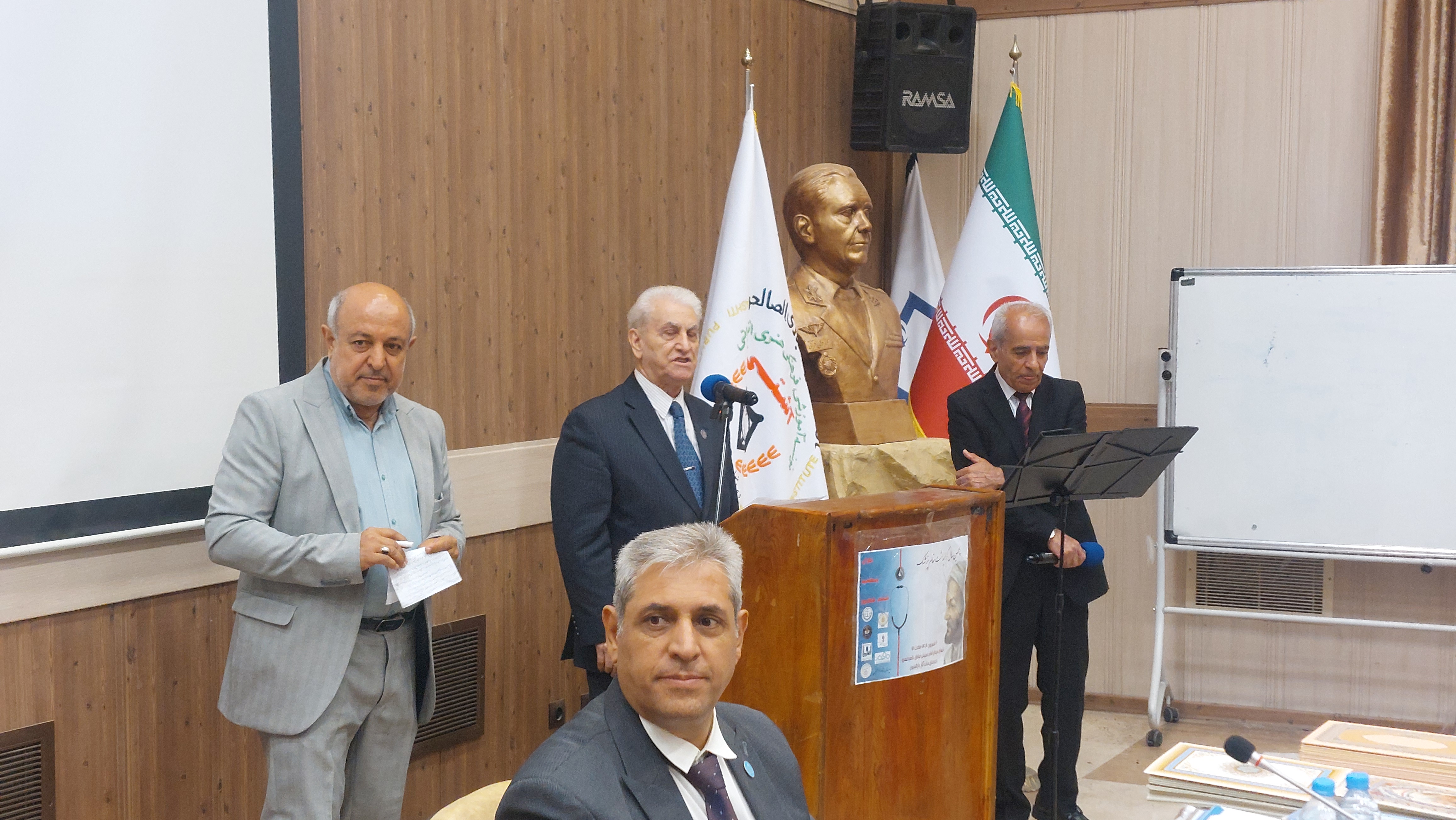
مراسم بزرگداشت مقام پزشک
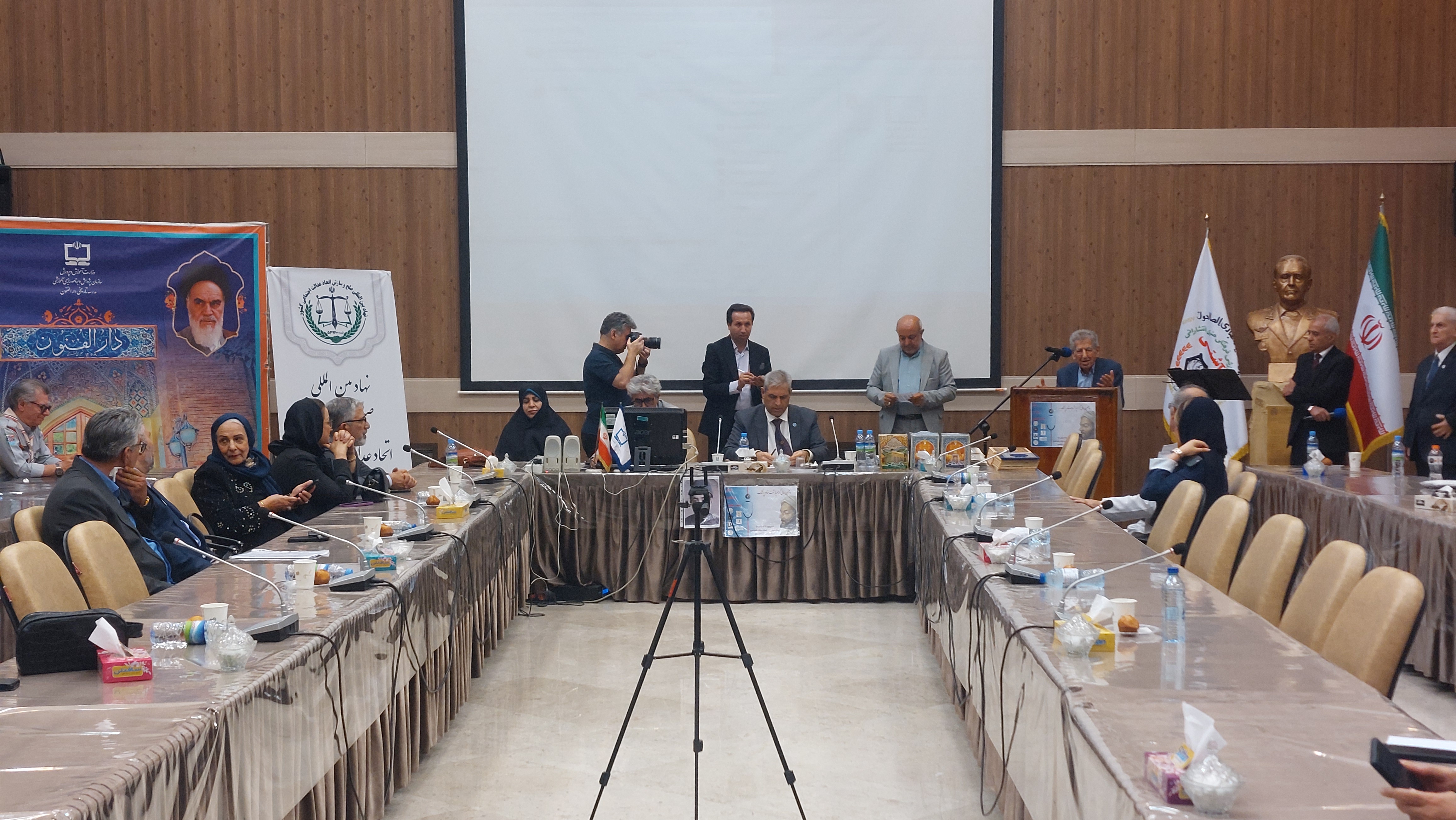
جناب آقای دکتر محمد باقر خانلر خانی دبیر اجرایی بزرگداشت
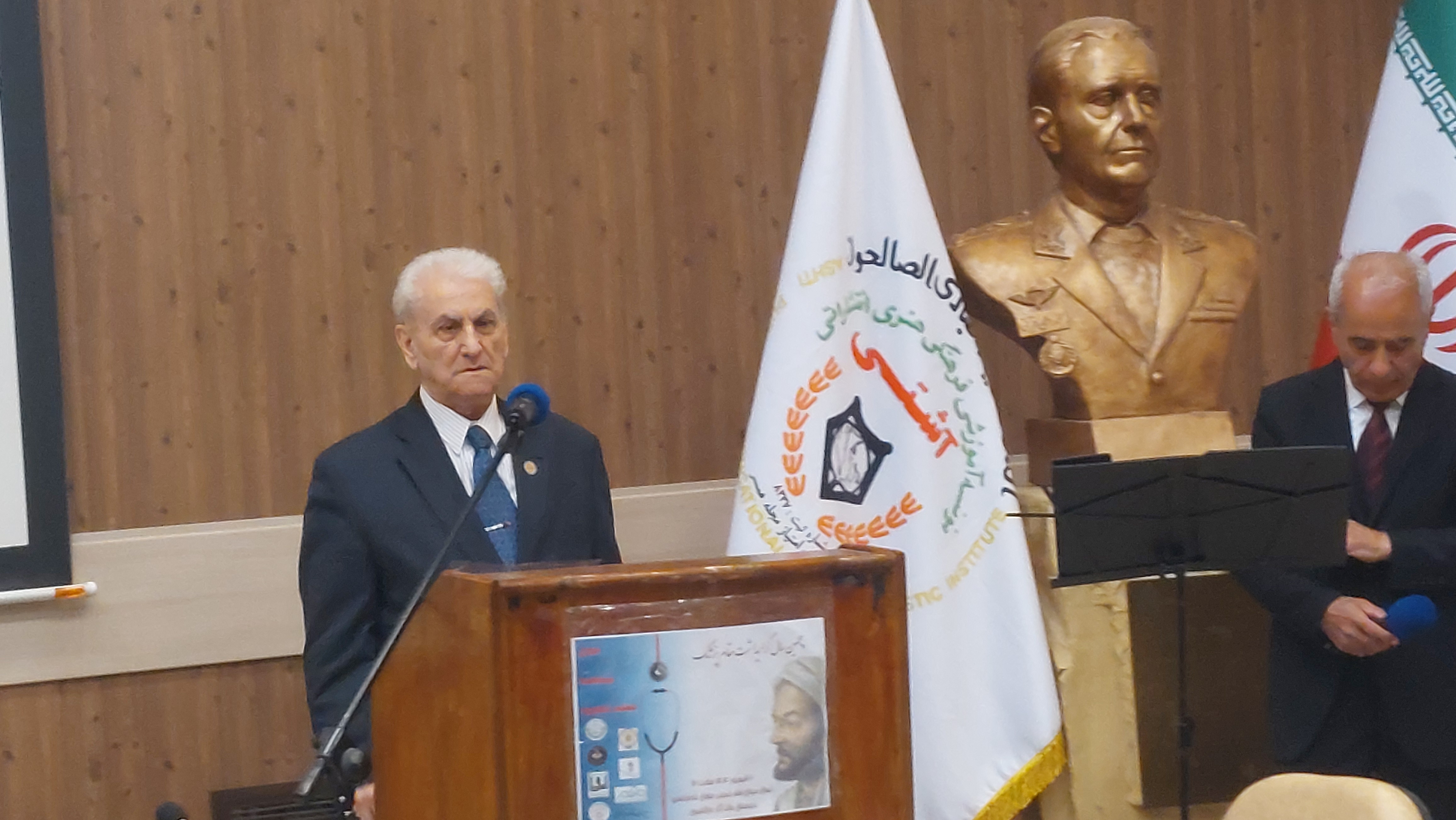
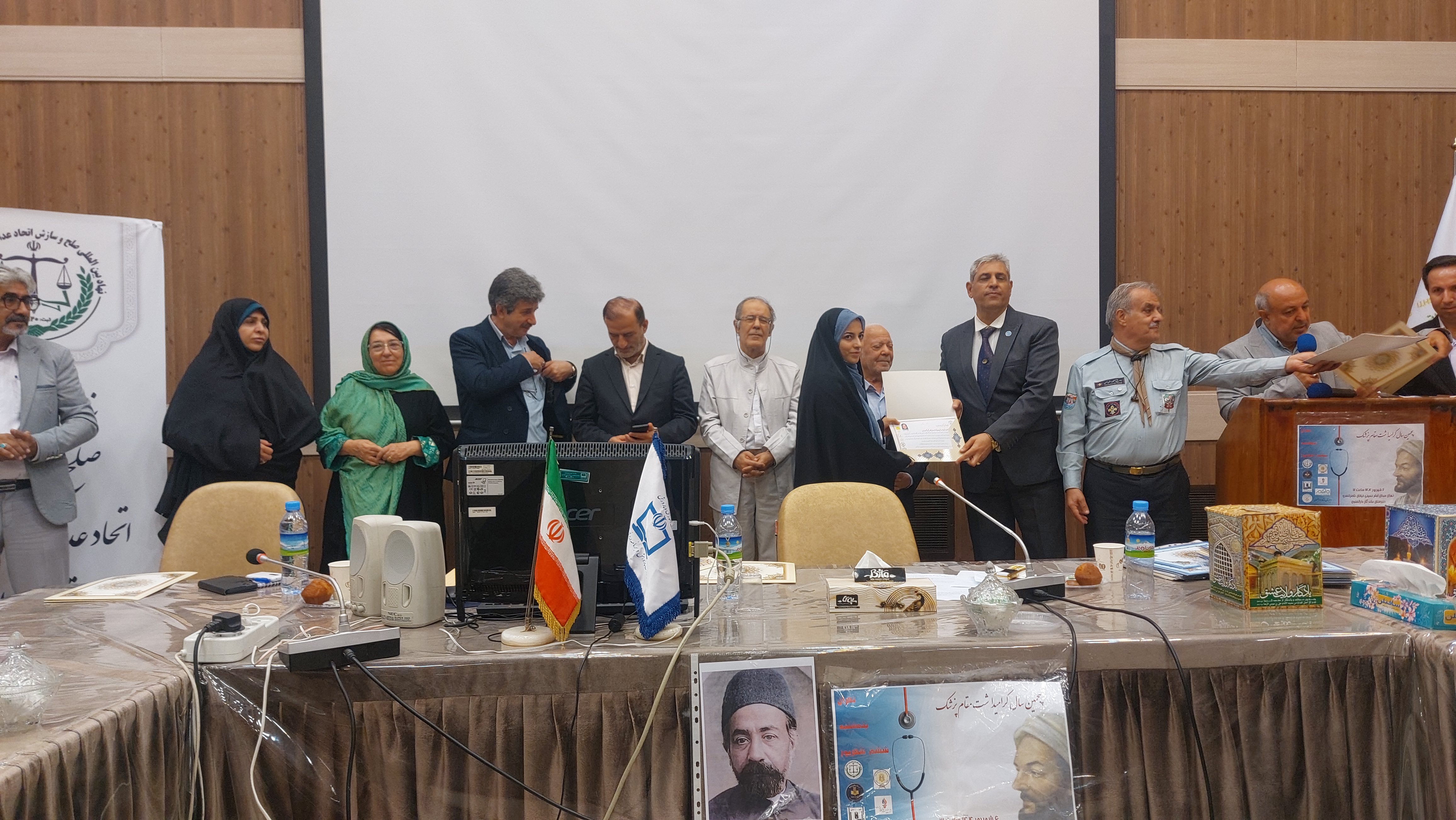
تقدیر از پزشکان
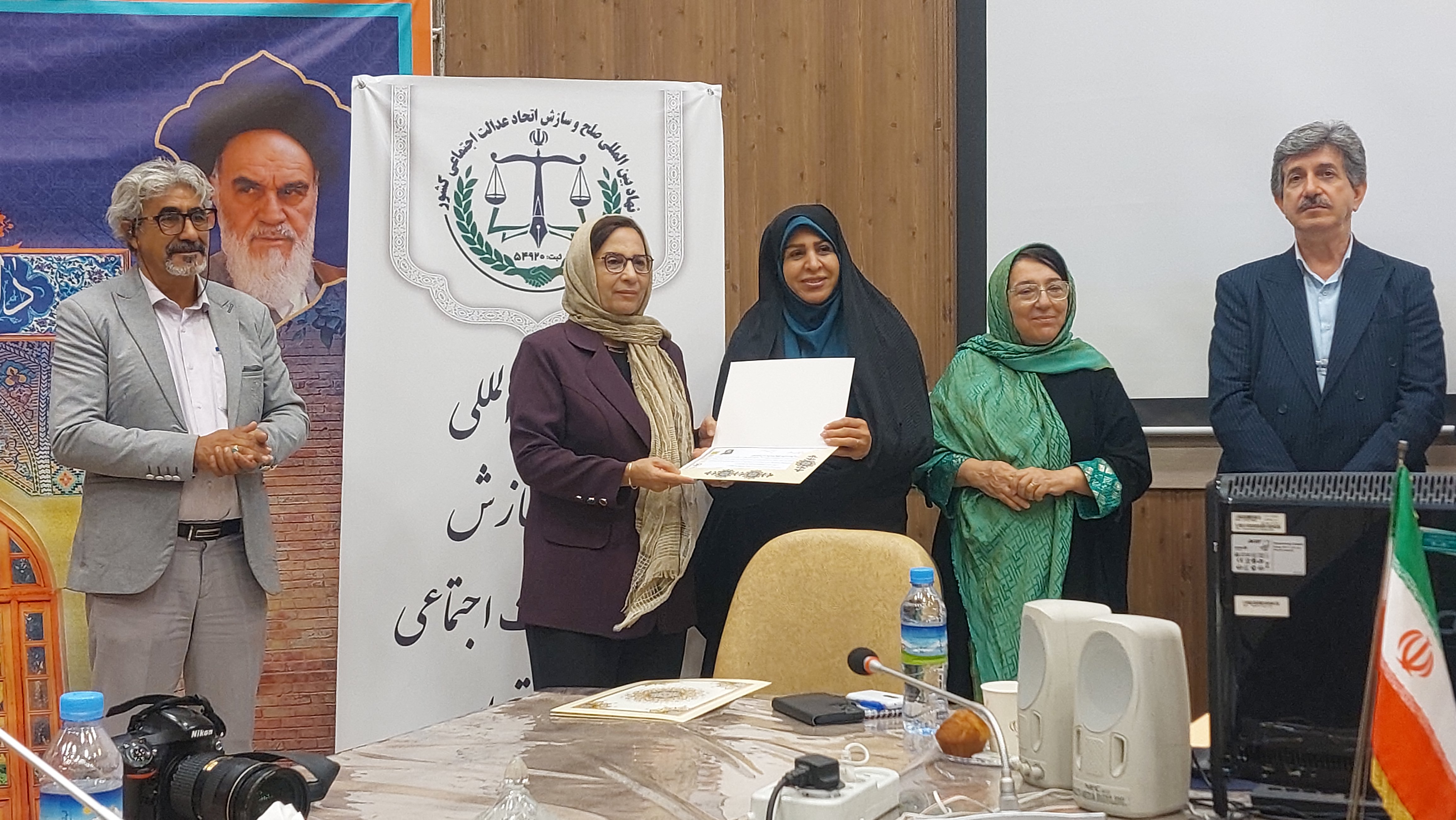
_l3uw.jpg)
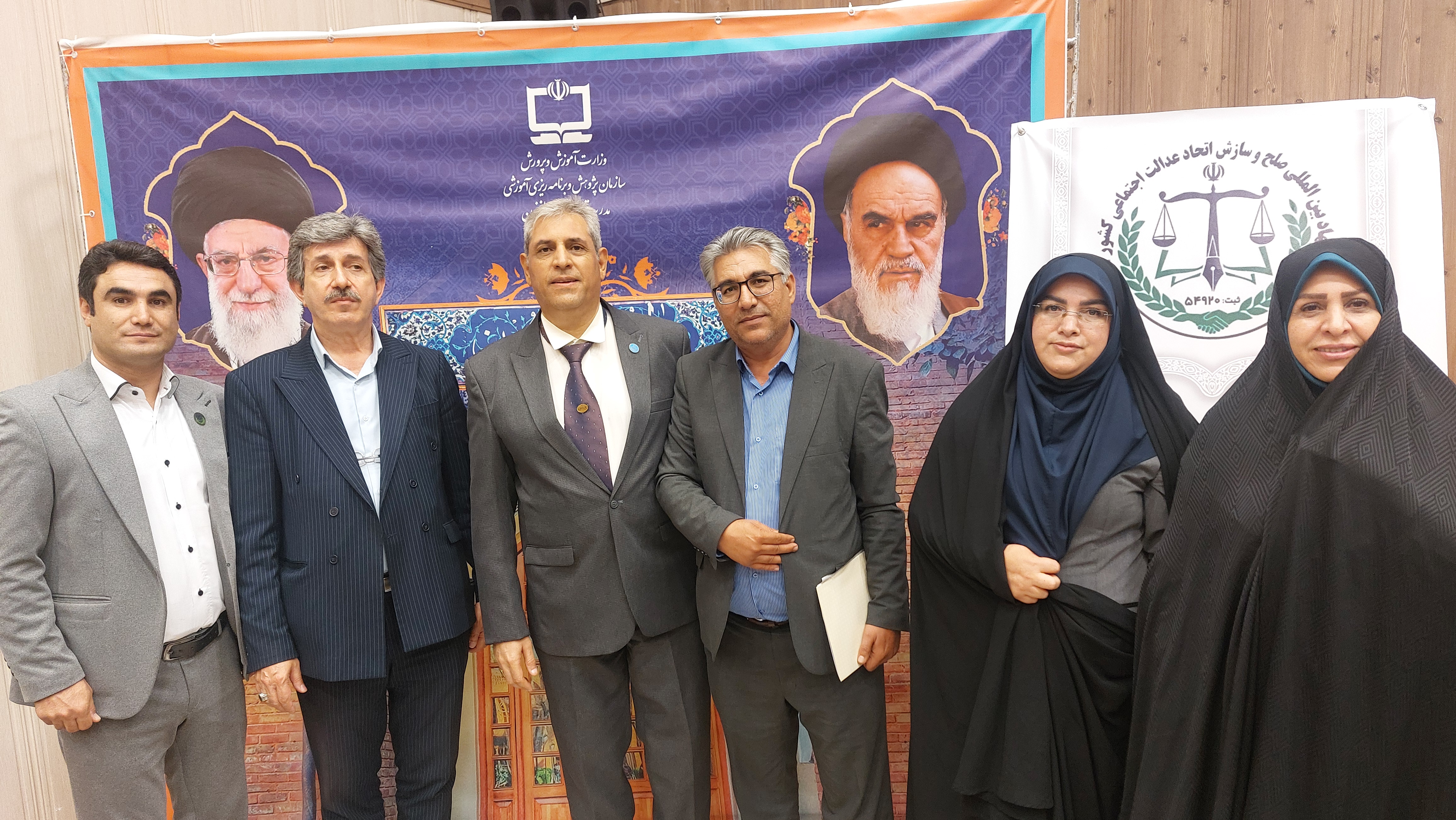
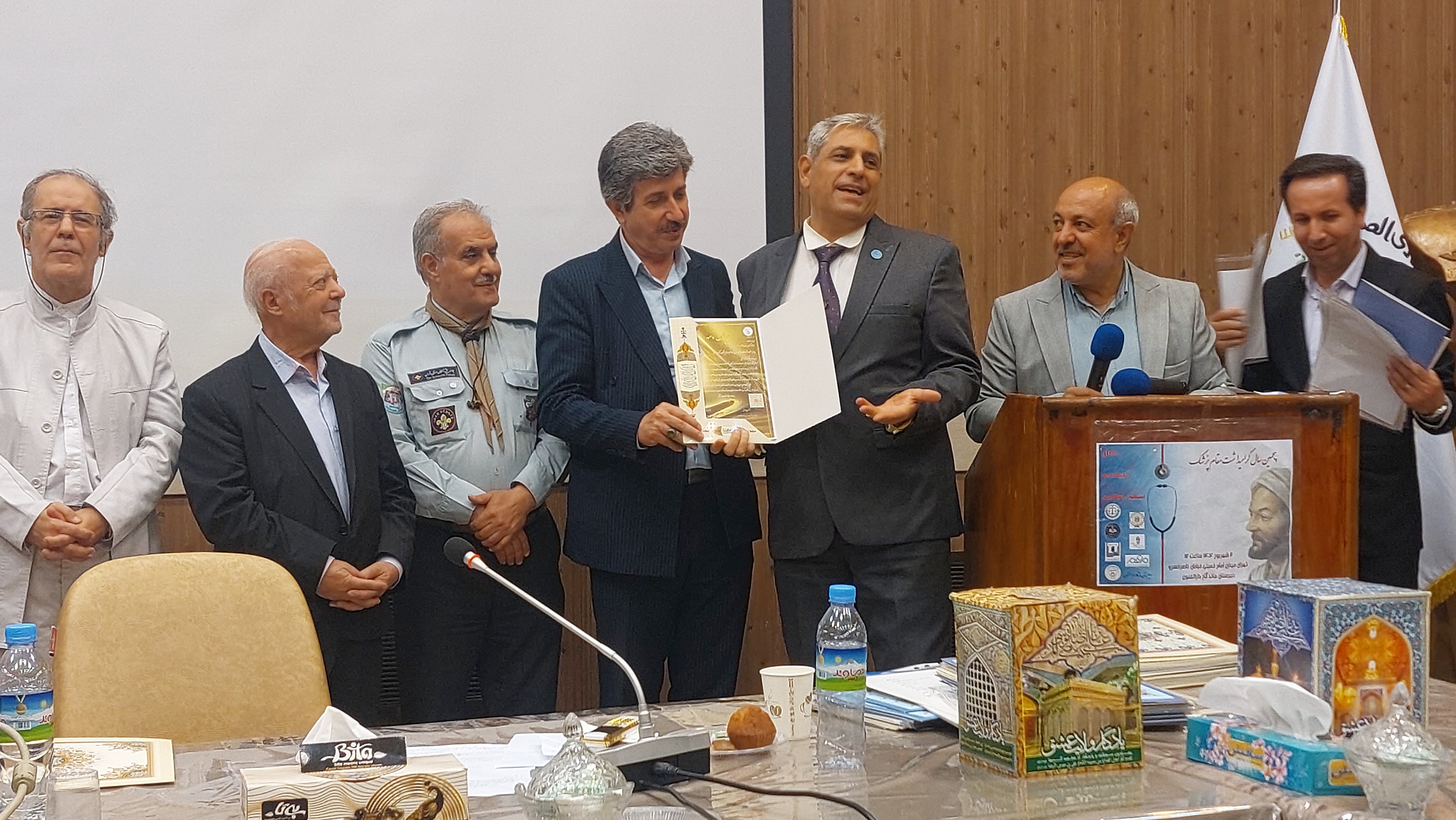
برای دیدن فیلم کامل مراسم روی تصاویر کلید نمایید
دبیر خانه دائمی قدردانان از جامعه پزشکی
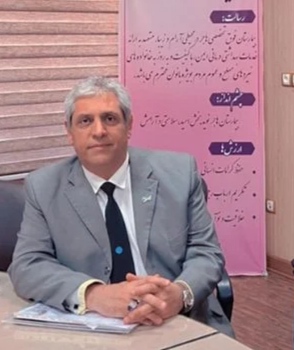
با نام و یاد خدای مهربان
مقرر شد طبق اساسنامه موسسه آشتی چون سالهای گزشته مراسم قدر دانی از مقام شامخ پزشک را در بیمارستان 503 ارتش (هاجر ع) بر گزار نمائیم و از مدیریت این بیمارستان نیز سپاس گذار هستیم .
قدردانانی از جامعه پزشکی
به استناد بند پنج از ماده هشت اساسنامه موسسه فرهنگی هنری آشتی مقرر شد جهت قدردانی از مقام شامخ پزشکان عزیز دبیرخانه ای تشکیل و خدمات به شرح زیر ارائه شود .
اهداف
- شناسائی و قدردانی از افرادی که برای رفاه بشریت در جامعه پزشکی تلاش نموده و می نمایند.
- ارائه راه کار های مناسب و علمی جهت خدمات گونا گون پزشکی و پیرا پزشکی به گروهای مختلف هدف
- دعوت از صاحب نظران و پیشکسوتان علاقمند به علوم پزشکی و پیراپزشکی جهت همفکری وهمراهی بیشتر و بهتر
• ارتباط با کلیه مراکز داخلی و خارجی که خدمات پزشکی را در قالب بشر دوستانه ارائه می دهند
• ارتباط و تبادل نظرو کسب تجربیات با کلیه پزشکان ایرانی خارج از کشور
• کشف استعداد های درخشان و حمایت از تحصیل و موفقیت های ایشان
• حمایت از تحقیقات و اکتشافات پزشکی
• حمایت و همیاری از انجمن ها و مراکز علمی بویژه پزشکی
• برگزاری دوره های ویژه و تخصصی پزشکی و پیرا پزشکی
• کمک به خدمات بهداشتی مهاجرین
خدمات
ثبت خدمات ، خاطرات و تجربیات ایشان در قالب فیلمهای مستند، چاپ کتاب و مقالات و درج در مطبوعات
قدردانی از ایشان در قالب اهداء لوح تقدیر ، تندیس و
دعوت از کلیه هموطنان زرتشتی ، ارمنی ، آشوری و کلیمی
همچنین مقرر گردید تمامی خدمات بدون در نظر گرفتن گرایش های سیاسی و مذهبی انجام پذیرد.
دعوت از علاقمندان به خدمت در این گروه
مشخص نمودن مخاطبین و خدمات گیرنده
در پایان مقرر گردید به مناسبت روز پزشک قدردانی از خدمات تنی چند از این سفید جا مگان صورت گیرد.
ودر کتاب جامعه ای این افراد معرفی شوند.
موضوعات مرتبط: مصاحبه
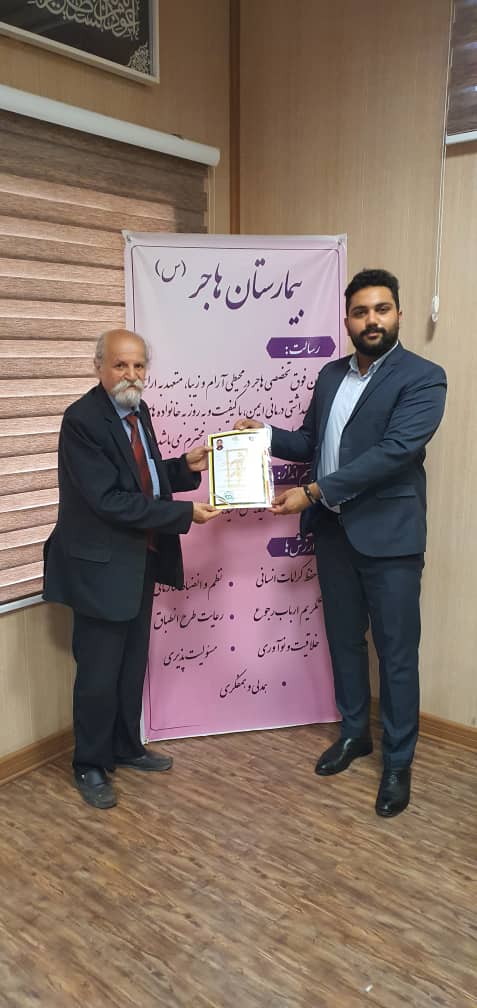
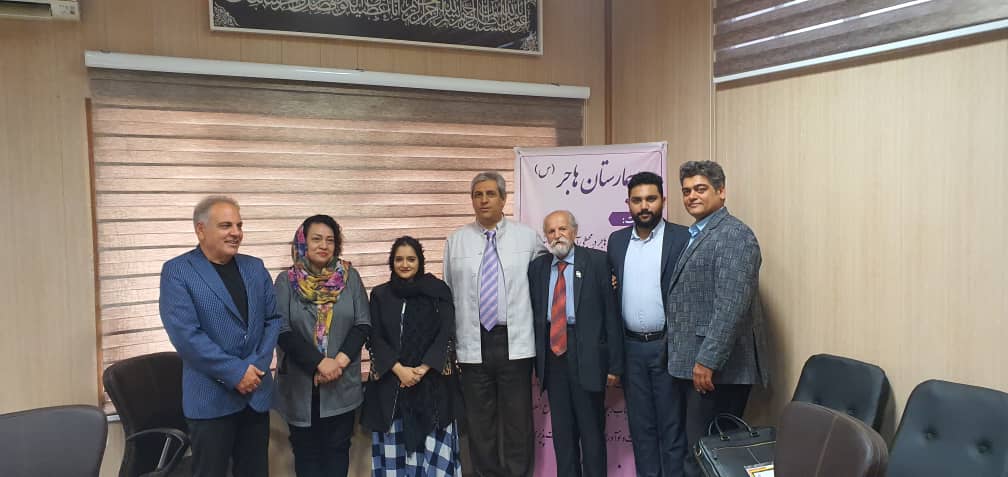
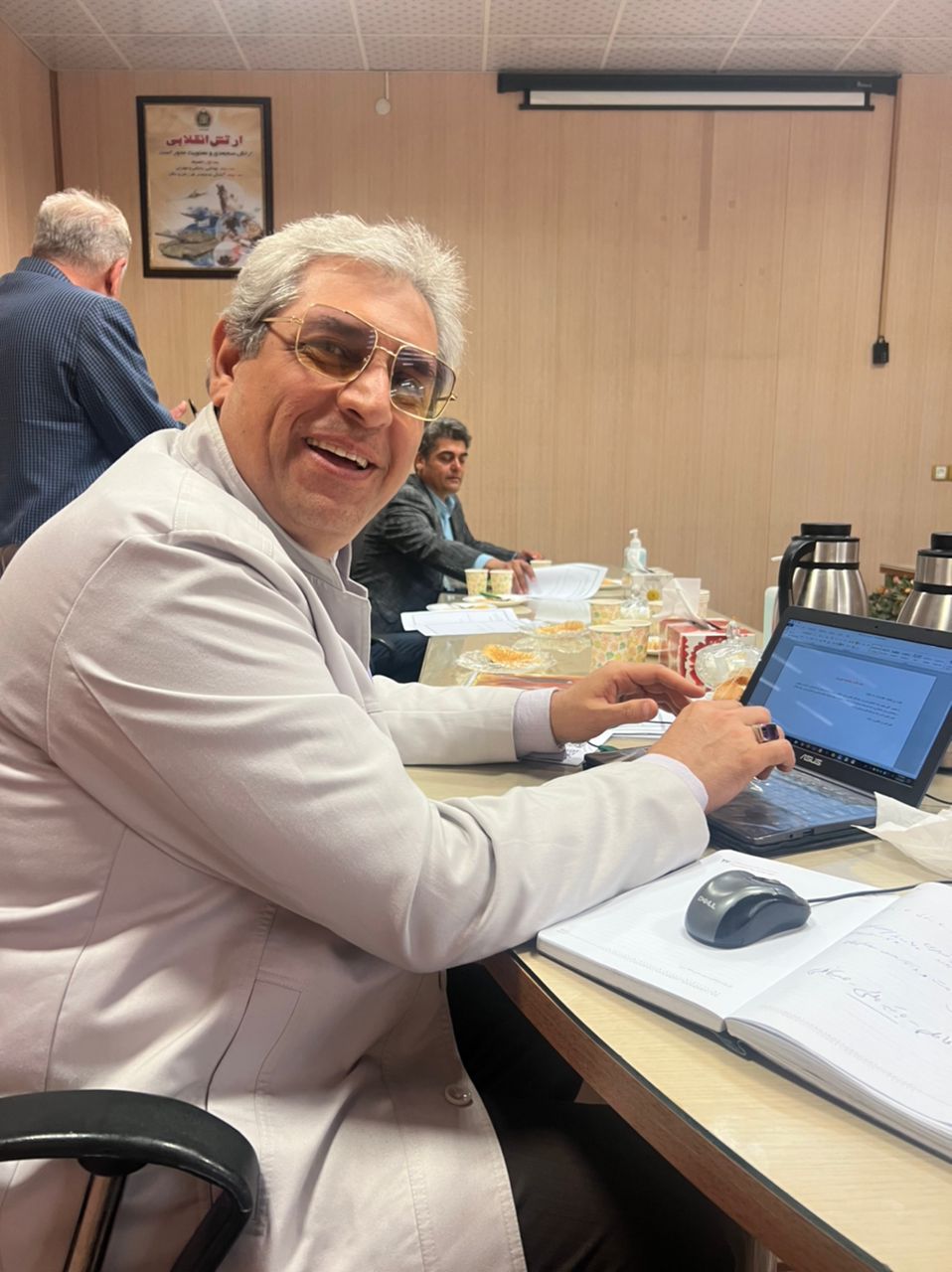
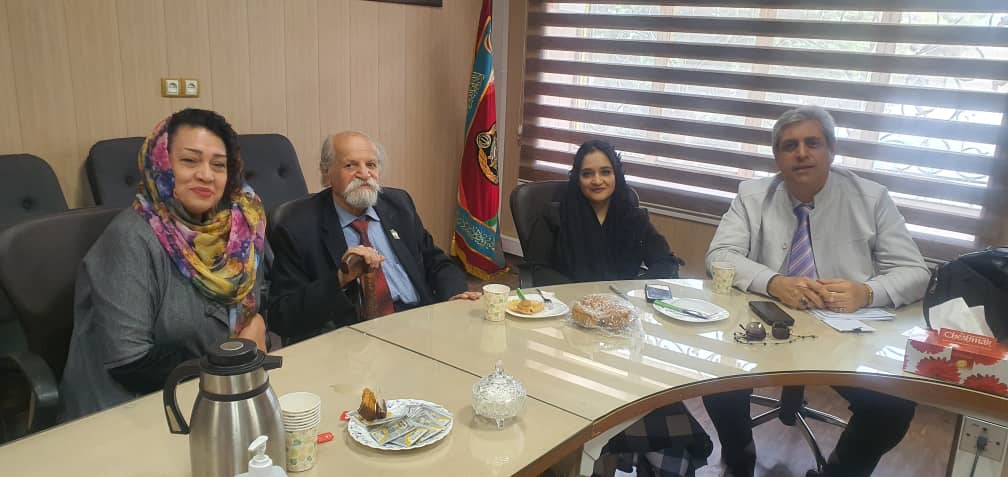
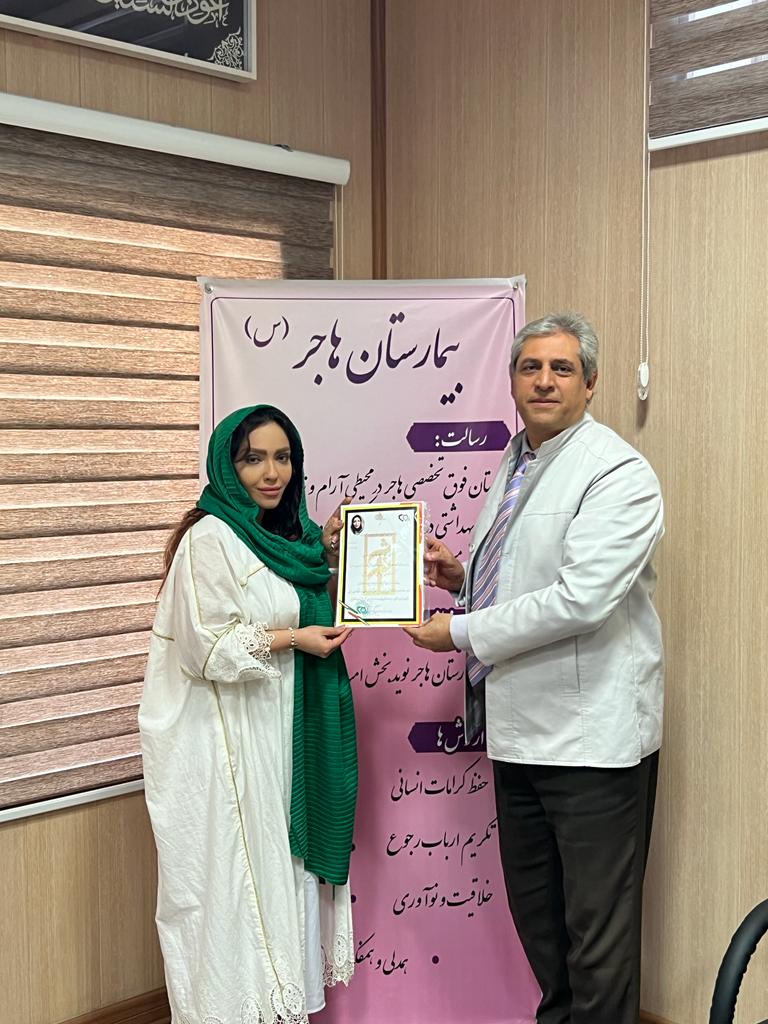
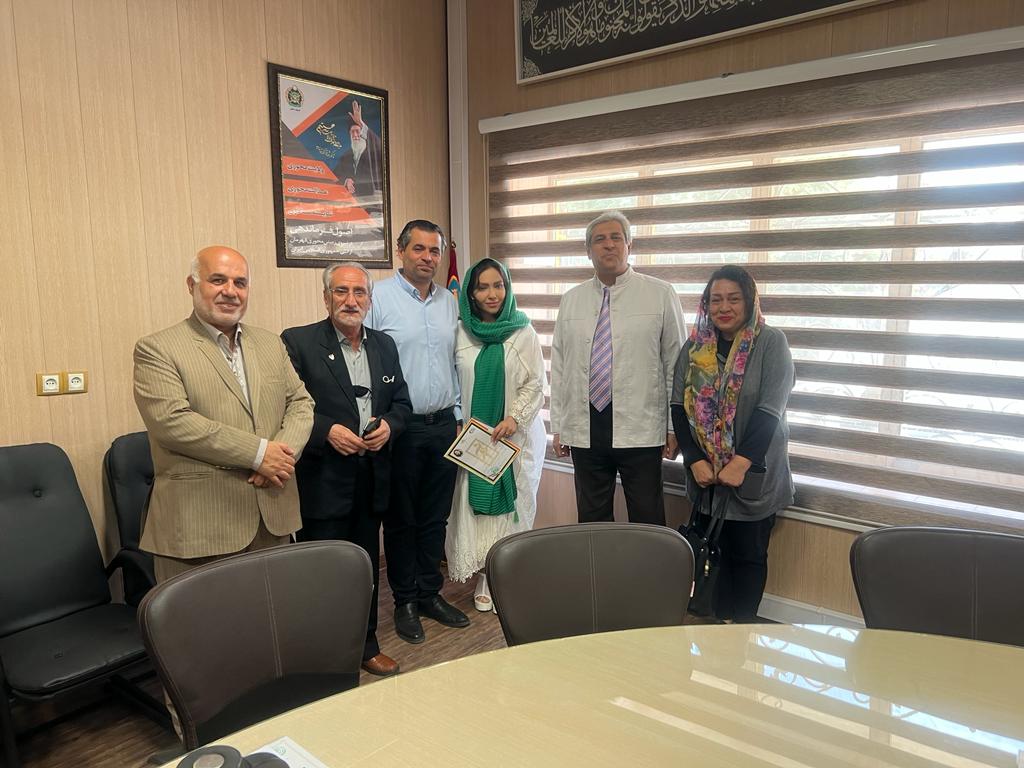
قدردانانی از جامعه پزشکی
به استناد بند پنج از ماده هشت اساسنامه موسسه فرهنگی هنری آشتی مقرر شد جهت قدردانی از مقام شامخ پزشکان عزیز دبیرخانه ای تشکیل و خدمات به شرح زیر ارائه شود .
اهداف
- شناسائی و قدردانی از افرادی که برای رفاه بشریت در جامعه پزشکی تلاش نموده و می نمایند.
- ارائه راه کار های مناسب و علمی جهت خدمات گونا گون پزشکی و پیرا پزشکی به گروهای مختلف هدف
- دعوت از صاحب نظران و پیشکسوتان علاقمند به علوم پزشکی و پیراپزشکی جهت همفکری وهمراهی بیشتر و بهتر
• ارتباط با کلیه مراکز داخلی و خارجی که خدمات پزشکی را در قالب بشر دوستانه ارائه می دهند
• ارتباط و تبادل نظرو کسب تجربیات با کلیه پزشکان ایرانی خارج از کشور
• کشف استعداد های درخشان و حمایت از تحصیل و موفقیت های ایشان
• حمایت از تحقیقات و اکتشافات پزشکی
• حمایت و همیاری از انجمن ها و مراکز علمی بویژه پزشکی
• برگزاری دوره های ویژه و تخصصی پزشکی و پیرا پزشکی
• کمک به خدمات بهداشتی مهاجرین
خدمات
ثبت خدمات ، خاطرات و تجربیات ایشان در قالب فیلمهای مستند، چاپ کتاب و مقالات و درج در مطبوعات
قدردانی از ایشان در قالب اهداء لوح تقدیر ، تندیس و
دعوت از کلیه هموطنان زرتشتی ، ارمنی ، آشوری و کلیمی
همچنین مقرر گردید تمامی خدمات بدون در نظر گرفتن گرایش های سیاسی و مذهبی انجام پذیرد.
دعوت از علاقمندان به خدمت در این گروه
مشخص نمودن مخاطبین و خدمات گیرنده
در پایان مقرر گردید به مناسبت روز پزشک قدردانی از خدمات تنی چند از این سفید جا مگان صورت گیرد.
ودر کتاب جامعه ای این افراد معرفی شوند.
حضور:
احتراماَ با عنایت به هماهنگی و برگزاری سومین دوره بزرگداشت مقام پزشک ، بدین وسیله ضمن دعوت از حضرتعالی جهت حضور در این مراسم، خواهشمند است برای هرچه شایسته تر برگزاری این بزرگداشت، اسامی و اطلاعات سه نفر از پزشکان شاخص و مورد نظر خود را به عنوان نامزد قدردانی تقدیر از ایشان به همراه شاخص و دلایل انتخاب را در اسرع وقت جهت هر گونه اقدام لازم به این دبیر خانه معرفی فرمایید.
شایان ذکر است تجلیل از پزشکان شهید و جانباخته در حین انجام وظیفه بویژه پزشکان اورژانس نیز مورد نظر می باشد.
در پایان بی نهایت خرسند می شویم به عنوان هیئت داوران افتخاری انتخاب پزشک نمونه سال 1402 شخصاً خود و یا نمایند محترمتان حضور یابد.
پیشاپیش از همکاری شما سپاسگزارم.
با سپاس فراوان
دبیرخانه بزرگداشت روز پزشک
سپاس نامه
جناب آقای پروفسور داریوش فر هود
از آنجا که حرفه پزشكي را براي خود اختيار نموده و با خود عهد کردید كه زندگتان را يكسره وقف خدمت به بشريت نمائید و احترام و تشكرات قلبي خود را به عنوان دين اخلاقي و معنوي به پيشگاه اساتيد محترم تقديم دارید و سوگند ياد نمودید وظيفه خود را با وجدان و شرافت انجام دهید. واولين وظيفه خود را اهميت و بزرگ شماري سلامت بيماران بدانید. واسرار بيمارانم را هميشه محفوظ دارید. وشرافت و حيثيت پزشكي را از جان و دل حفظ نمائید. همكاران را برادران و خواهران خود شمارید. دين، مليت، نژاد، عقايد سياسي و موقعيت اجتماعي بیماران هيچگونه تأثيري در وظايف پزشكي نسبت به بيمارانتان نداشته باشد. و در هر حال به زندگي بشر كمال احترام را مبذول داشته و هيچگاه معلومات پزشكي را برخلاف قوانين بشري و اصول انساني به كار نبرده . آزادانه به شرافت خود سوگند ياد نمودیدو آنچه را كه قول دادید به انجام به انجام رساندید.
بران شدیم تا در روز پزشک بدینوسیله مراتب سپاس خود را از سالها تلاش ارزنده شما به انجام رسانده و نام تان را در فهرست شایسته ترین انسان های قرن حاضر به یادگار بگذاریم .
بی شک کم نیستند سپید جامگان دیگری که عاشقانه و عالمانه در راستای اهداف بشر دوستانه چون شما کمر همت به خدمت بسته اند و ما تنها به نمایندگی این جامعه از شما سپاسگزاریم.
"دبیر خانه دائمی قدردانان جامعه پزشکی "
1400
2021
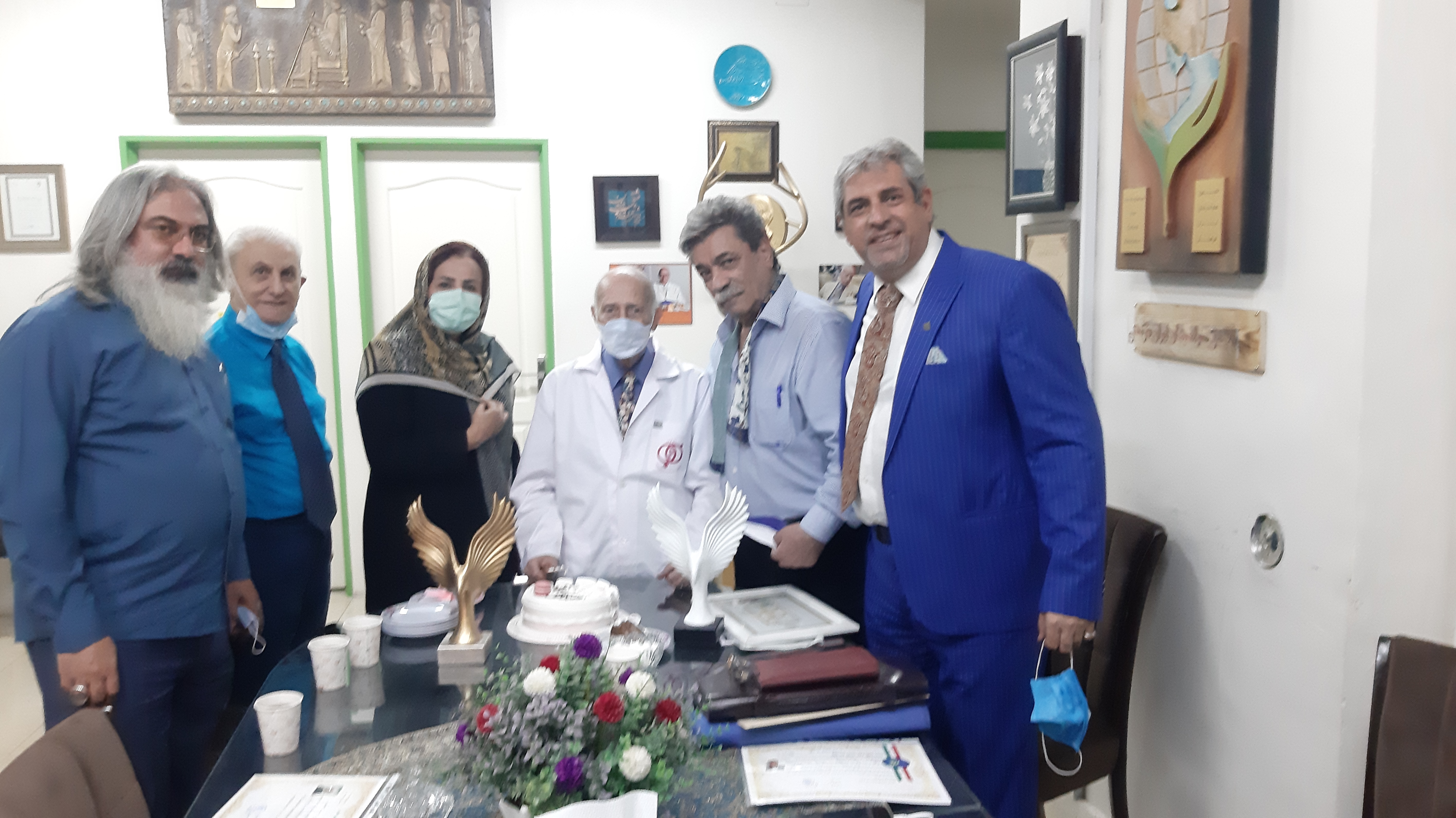
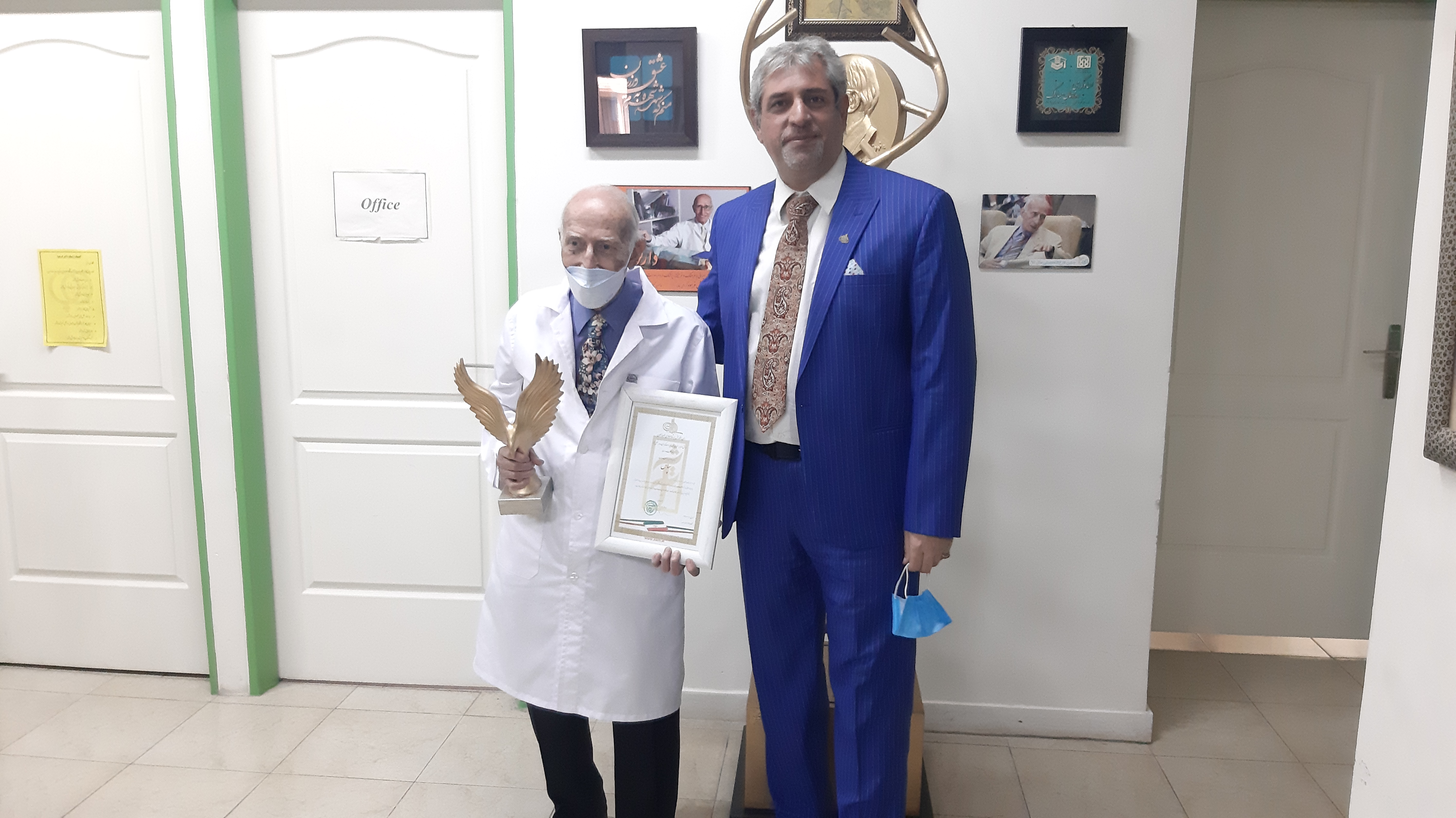
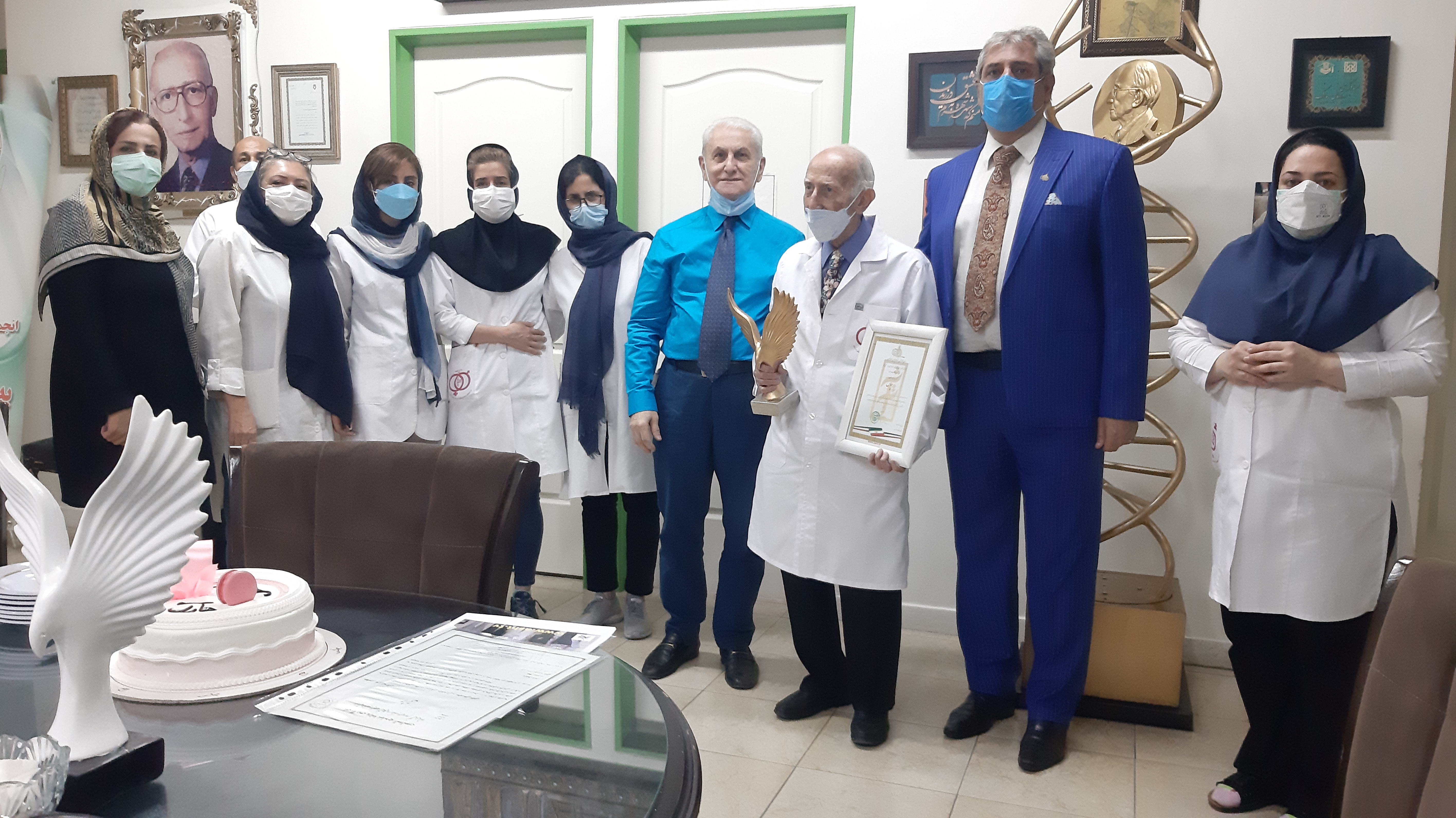
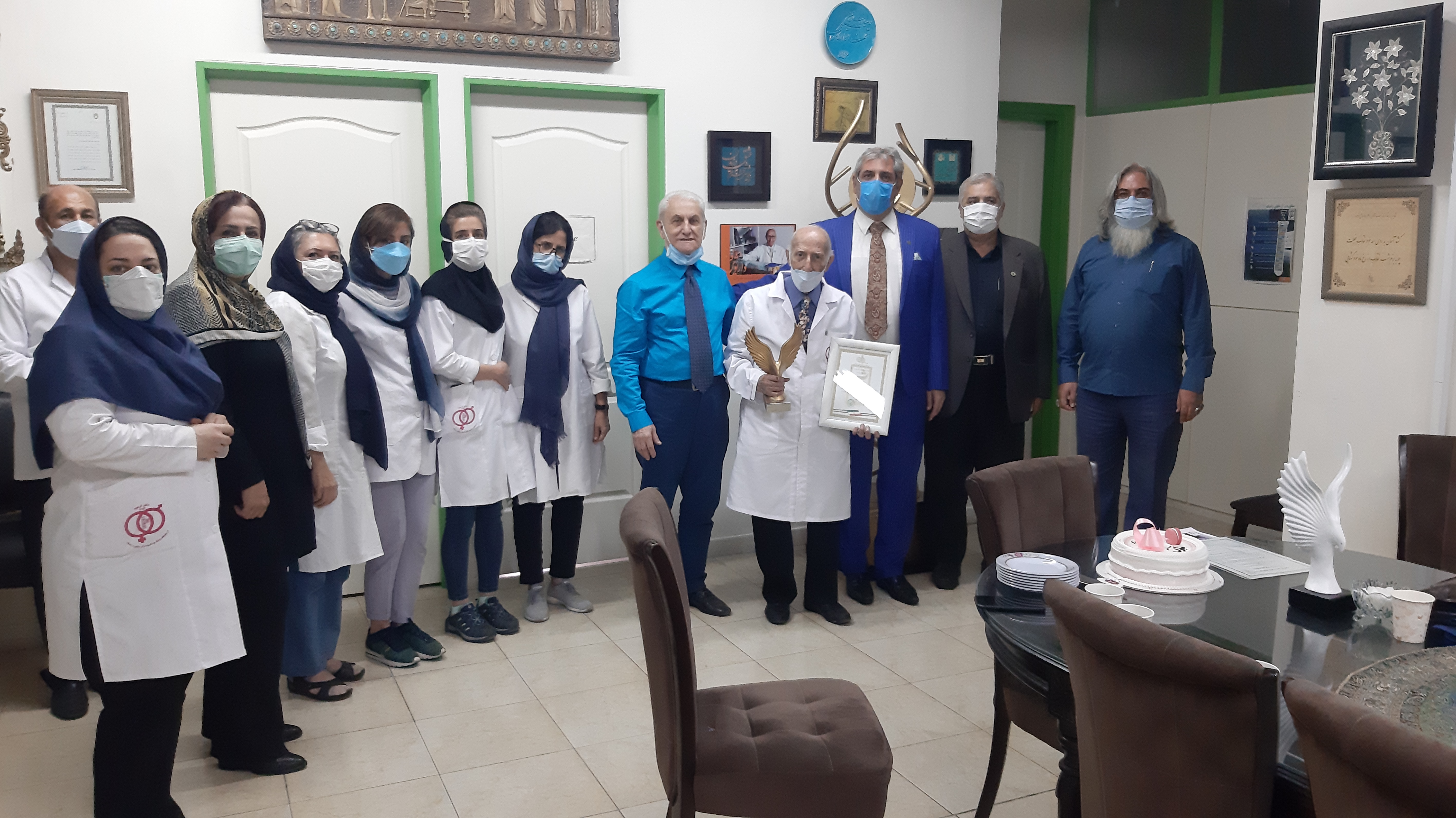
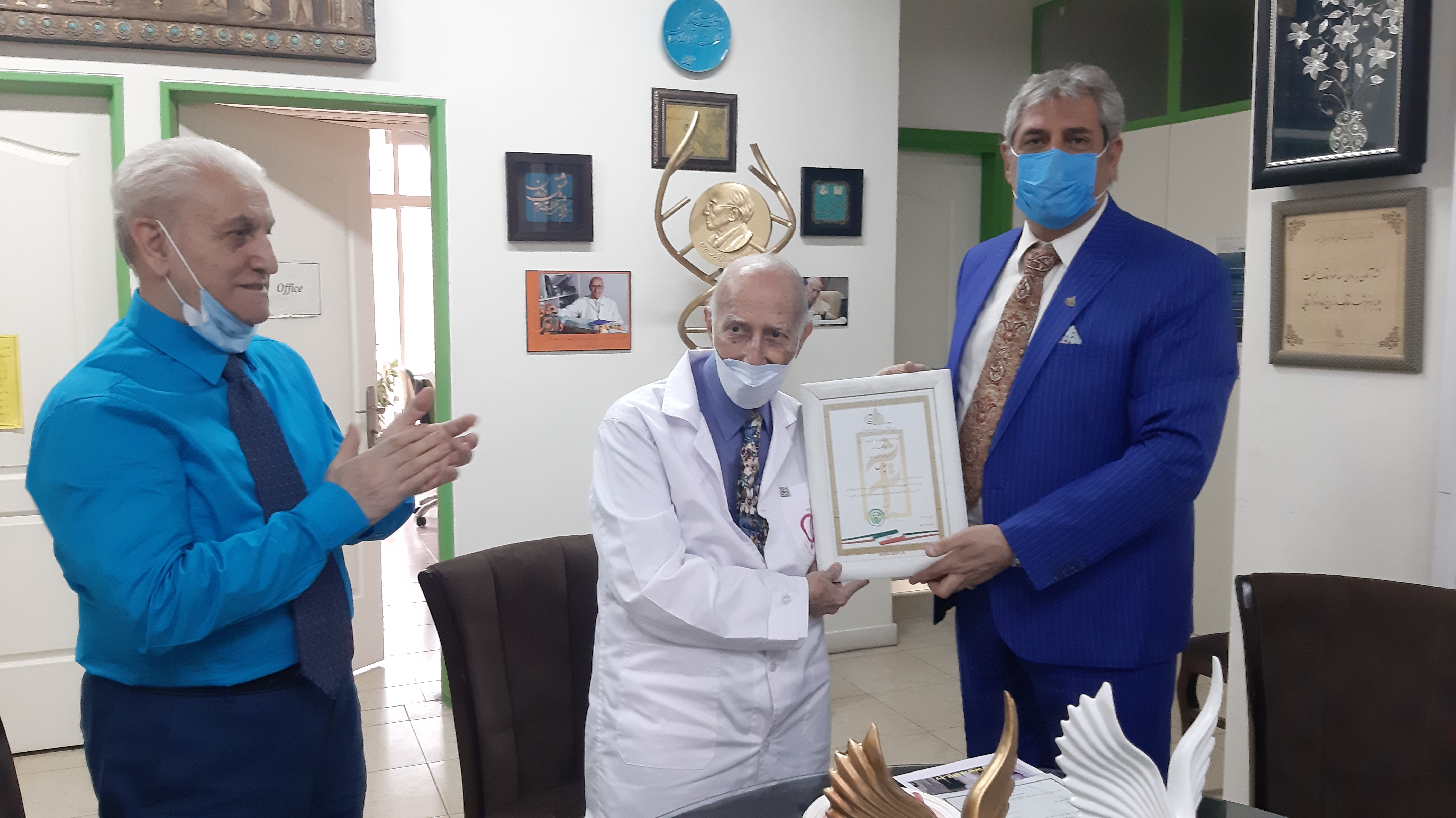
دوشنبه اول شهریور 1400 مصادف با روز پزشک دفتر پروفسور داریوش فر هود و قدر دانی از این شخصیت علمی توسط دوستان
http://tabib123.blogfa.com/
سلام
شرایط تحصیل پزشکی در ترکیه
تحصیل پزشکی در ترکیه، شرایط ورود به رشته پزشکی و هزینه های تحصیل در این رشته در این مقاله مورد بحث و بررسی قرار می گیرد. آیا مدارک پزشکی کشور ترکیه مورد تایید وزارت بهداشت ایران قرار می گیرد؟ هزینه تحصیل پزشکی در ترکیه حدودا به چه میزان می باشد؟ در این مقاله به تفصیل به این جزئیات خواهیم پرداخت و امیدواریم به تمامی نکات و سوالات شما پاسخ داده شود. سالانه دانشجویان فراوانی ترکیه را به عنوان مقصد تحصیل پزشکی انتخاب می کنند. تحصیل پزشکی در ترکیه از لحاظ هزینه بسیار مناسب می باشد که در ادامه به آن خواهیم پرداخت. دانشجویان ایرانی به دلیل نزدیکی ترکیه به ایران، تحصیل در ترکیه را انتخاب می کنند. بسیاری از دانشجویان، رویای تحصیل در رشته پزشکی را دارند و این رشته را مناسب ترین رشته جهت ادامه تحصیل و ورود به بازار کار می دانند که با توجه به شرایط کنونی ترکیه می توانند برای تحصیل پزشکی در ترکیه اقدام کنند. حق هر دانشجویی است که قبل از اعزام جهت تحصیل در کشور مقصد، از شرایط و نکات قانونی تحصیلی کشور مقصد مطلع شود تا ضمن پروسه و یا بعد از پروسه با مشکلی مواجه نشود. همچنین جهت کسب اطلاعات بیشتر در خصوص تحصیل پزشکی در ترکیه می توانید به وب سایت جامع موسسه حقوقی ملک پور (MIE اتریش) مراجعه فرمایید و یا با دفاتر موسسه تماس حاصل فرمایید و از مشاوره رایگان بهره مند شوید.
ادامه مطلب
دارو خانه دکتر حسین تقی پور
درمانگاه فوق تخصصی سلامت و دیابت تابان
دارو های تخصصی دیابت ،اطلاعات دارویی دیابتی
تائید انترنتی نسخ دارویی ( انواع انسولین)
خط مستقیم دارو خانه :22376499
تلفن درمانگاه 22377250
تا 258
شهرک غرب خیابان شهید دادمان غربی انتهای بلوار درختی شمالی پلاک 10
RADIATION RESEARCH 186, 000–000 (2016)
0033-7587/16 $15.00
_2016 by Radiation Research Society.
All rights of reproduction in any form reserved.
DOI: 10.1667/RR14476.1
Base Release and Modification in Solid-Phase DNA
Exposed to Low-Energy Electrons
Surakarn Choofong,1 Pierre Cloutier, Le´on Sanche and J. Richard Wagner2
Department of Nuclear Medicine and Radiobiology, Faculty of Medicine and Health Sciences,
Universite´ de Sherbrooke, Sherbrooke, Quebec, Canada
Choofong, S., Cloutier, P., Sanche, L. and Wagner, J. R.
Base Release and Modification in Solid-Phase DNA Exposed
to Low-Energy Electrons. Radiat. Res. 186, 000–000 (2016).
Ionization generates a large number of secondary lowenergy
electrons (LEEs) with a most probable energy of
approximately 10 eV, which can break DNA bonds by
dissociative electron attachment (DEA) and lead to DNA
damage. In this study, we investigated radiation damage to
dry DNA induced by X rays (1.5 keV) alone on a glass
substrate or X rays combined with extra LEEs (average
energy of 5.8 eV) emitted from a tantalum (Ta) substrate
under an atmosphere of N2 and standard ambient
conditions of temperature and pressure. The targets
included calf-thymus DNA and double-stranded synthetic
oligonucleotides. We developed analytical methods to
measure the release of non-modified DNA bases from
DNA and the formation of several base modifications by
LC-MS/MS with isotopic dilution for precise quantification.
The results show that the yield of non-modified bases
as well as base modifications increase by 20–30% when
DNA is deposited on a Ta substrate compared to that on a
glass substrate. The order of base release (Gua . Ade .
Thy ; Cyt) agrees well with several theoretical studies
indicating that Gua is the most susceptible site toward
sugar-phosphate cleavage. The formation of DNA damage
by LEEs is explained by DEA leading to the release of nonmodified
bases involving the initial cleavage of N1-C10,
C30-O30 or C50-O50 bonds. The yield of base modifications
was lower than the release of non-modified bases. The
main LEE-induced base modifications include 5,6-dihydrothymine
(5,6-dHT), 5,6-dihydrocytosine (5-dHU), 5-hydroxymethyluracil
(5-HmU) and 5-formyluracil (5-ForU). The
formation of base modifications by LEEs can be explained
by DEA and cleavage of the C-H bond of the methyl group
of Thy (giving 5-HmU and 5-ForU) and by secondary
reactions of H atoms and hydride anions that are
generated by primary LEE reactions followed by subsequent
reaction with Cyt and Thy (giving 5,6-dHU and 5,6-
dHT). _ 2016 by Radiation Research Society
INTRODUCTION
Ionizing radiation, such as vacuum ultraviolet (UV), X
rays and gamma rays, induces a wide variety of DNA
damage, including single-strand breaks (SSB), doublestrand
breaks (DSB), modifications of purine and pyrimidine
bases, sugar damage, apurinic/apyrimidic sites, base
release, DNA-DNA and DNA-protein crosslinks (1–7). The
effects of ionizing radiation arise from either the indirect
effect, which involves the generation of reactive species
such as hydroxyl radicals by the radiolysis of water, or the
direct effect, which involves the absorption of radiation
energy directly by the target molecule leading to its
excitation or ionization. In the initial energy-depositing
events, ionization produces a large number of secondary
low-energy electrons (LEEs), which have a most probable
energy of less than 10 eV (8). The later species can cause
both indirect and direct mediated damage to DNA. LEEs
with energy below 15 eV can temporarily attach to specific
orbitals localized on DNA and lead to the formation of
molecular transient negative ions (TNIs) (9). These
metastable molecular anions can dissociate into an anion
and a neutral radical (e– AB ! AB*– ! A B–) (9) on a
short time scale by a process known as dissociative electron
attachment (DEA).
There are approximately 3 3 104 electrons generated per
MeV of deposited energy with a kinetic energy below 30 eV
(10). Previously, LEEs were shown to induce fragmentation
of the DNA backbone by the formation of SSB or DSB after
irradiation of supercoiled plasmid molecules under ultrahigh
vacuum followed by gel electrophoresis as a sensitive
method for the detection of conformational changes (11–
17). The type of damage was identified in greater detail by
chemical analysis of LEE-induced products remaining
within the irradiated DNA films. Zheng et al. (11, 18, 19)
reported two main reactions: the release of non-modified
bases and the formation of strand breaks using short
Editor’s note. The online version of this article (DOI: 10.1667/
RR14476.1) contains supplementary information that is available to
all authorized users.
1 Scholar in training.
2 Address for correspondence: Department of Nuclear Medicine
and Radiobiology, Faculty of Medicine and Health Sciences,
Universite´ de Sherbrooke, Sherbrooke, 3001, 12th Avenue North,
Quebec, Canada J1H 5N4; email: richard.wagner@usherbrooke.ca.
0
oligonucleotides as models of LEE-induced DNA damage.
The formation of strand breaks involved direct cleavage of
the phosphodiester bond leaving a non-modified phosphate
group at one terminus and a modified as yet unidentified
residue on the other terminus. Based on these results, we
have proposed that LEEs are initially captured by DNA
bases, giving a transient negative ion (TNI), which is then
transferred to an antibonding orbital of either the N1-C1
bond, leading to dissociation of this bond and prompt base
release, or the sugar-phosphate moiety, leading to cleavage
of the C-O bond at either the C50 or C30 positions of the
deoxyribose ring. These reactions are extensively supported
by published theoretical investigations (20–22). In similar
published studies using pure sources of LEEs, several base
modifications have been identified that were induced by the
reaction of LEEs with TTT, including 5,6-dihydrothymine
(5,6-dHT), 5-hydroxymethyluracil (5-HmU) and 5-formyluracil
(5-ForU) (23, 24).The role of LEE-induced DNA
damage during the exposure of cells to ionizing radiation
remains difficult to evaluate. Because LEEs are very
reactive and have a short interaction range (;10 nm),
electron beams can only be formed under vacuum
conditions. Thus, irradiation of solid DNA films with such
beams greatly restricts the chemical reactions of primary
reactive species. However, it is essential to probe the initial
chemical steps that are common under both extreme and
ambient conditions to extrapolate the mechanisms of LEEinduced
DNA damage to those occurring in cells. With this
approach in mind, we have devised a novel system to
demonstrate the reactivity of LEEs under standard ambient
conditions of temperature and pressure (SATP) (26). This
system also allows for the introduction of primary reactants,
such as H2O and O2, which can change the course of
reaction of the initial radical and ionic species believed to be
generated by LEE reactions. In this system, liquid DNA
samples are freeze dried as a thin film onto either glass or
tantalum (Ta) substrates. After exposure to X rays (1.5 keV)
under SATP, the formation of DNA damage on the glass
substrate can be attributed solely to the interaction of X-ray
photons, whereas damage on the Ta substrate can be
attributed to both the direct interaction of X rays and the Xray-
induced emission of LEEs from the Ta substrate. The
emitted electron distribution exhibits a peak at 1.4 eV and
an average energy of 5.85 eV. For comparison, we
previously reported the enhancement of SSB, DSB, and
DNA-DNA crosslinks induced by LEEs and 1.5 keV X rays
when supercoiled plasmid DNA was deposited on a Ta
substrate under vacuum conditions (27). Afterwards, the
supercoiled plasmids were irradiated in air (28) and under a
nitrogen atmosphere at SATP (25, 26). More detailed
studies with supercoiled plasmid DNA have been performed
by introducing specific primary reactants during irradiation.
Interestingly, the addition of H2O, O2 and N2O into this
system greatly enhanced the formation of SSB and DSB,
particularly for DNA irradiated on a Ta surface with the
emission of LEEs (27–32). For the current study, we
continued similar investigations using linear double-stranded
DNA from calf thymus and oligonucleotides, as a target
under SATP conditions. Instead of analyzing conformational
modifications to DNA as in previous investigations,
we used liquid chromatography (LC) and tandem mass
spectrometry (MS/MS) to identify specific products remaining
on the surface of the irradiated glass and Ta
substrates; these include base release and base modifications.
MATERIALS AND METHODS
Labeled 20-deoxyadenosine (15N5), 20-deoxyguanosine (15N5), cytosine
(15N3), thymine (15N2) and 8-oxo-7,8-dihydro-20-deoxyguanosine
(15N5) were purchased from Cambridge Isotope Laboratories, Inc.
(Tewksbury, MA). Labeled adenine (15N5) and guanine (15N5) were
prepared from the corresponding 20-deoxynucleoside by hydrolysis in
1% of formic acid at 378C for 24 h followed by purification and
quantification of the nucleobase on reversed-phase HPLC. Labeled
5,6-dihydro-20-deoxythymidine (the nucleoside of 5,6-dHT) and 5,6-
dihydro-20-deoxyuridine (the nucleoside of 5,6-dHU) were prepared
by radiolysis, following a previously published procedure (33).
Briefly, 10 mM (15N2)-thymidine and (15N3)-20-deoxycytidine in 10
ml deaerated (i.e., bubbled with N2 for 30 min) aqueous solution were
exposed to gamma radiation (8,000 Gy, dose rate 10.7 Gy/min) in the
presence of cysteine (0.5 mM). Quantification of these compounds
was determined by HPLC-UV using an authentic nonlabeled standard
of the nucleoside of 5,6-dHT assuming that 5,6-dHT and 5,6-dHU
have the same UV absorption at 220 nm. For 5-hydroxymethy-20-
deoxyuridine and 5-formyl-20-deoxyuridine (the nucleosides of 5-
HmU and 5-ForU), the synthesis of isotopic internal standards has
been reported elsewhere (34). A number of experiments were
performed with linear double-stranded calf thymus DNA (CT-DNA;
Sigma Canada/Gentec International, Markham, Canada). CT-DNA
was prepared by extraction and precipitation for the removal of
proteins and other impurities to obtain a stock solution of purified CTDNA
in TE buffer (10 mM Tris, 1 mM EDTA, pH 8.0). The CT-DNA
concentration was determined by measuring the ratio of UV
absorption at 260. The ratio of absorption at 260–280 nm was 1.95
indicating that the amount of protein remaining in DNA was less than
10%. Oligonucleotides (ODNs) were purchased from Alpha DNA
(Montreal, Canada) and purified before use by HPLC-UV. To produce
double-stranded ODN-AB, ODN A [50-TGA CTG CAT ACG CAT
GTA GAC GAT GTG CAT-30 (30-mer)] was mixed with an equal
amount of ODN B [50-ACT GAC GTA TGC GTA CAT CTG CTA
CAC GTA-30 (30-mer)] and hybridized in a PCR thermal cycler.
Similarly, double-stranded DNA was produced from self-complementary
ODN-DDD [CGC GAA TTC GCG; Dickerson-Drew dodecamer
(12-mer)].
Irradiation of DNA
Thin films of DNA were prepared by depositing a solution of 12 ll
of DNA containing 600 ng of DNA, which was diluted 200–500-fold
from concentrated stock DNA solution with Nanopuree water. DNA
was deposited on either a glass or Ta substrate followed by
lyophilization according to the method of Alizadeh et al. (35). Film
thickness was approximately 10 nm, which corresponds to 5
monolayers of DNA assuming a density of DNA of 1.7 g/cm3 (36).
The surface diameter of the films was 6.0 6 0.2 mm. Before
depositing the DNA solution, the glass and Ta substrates were
carefully washed with ethanol and H2O, and dried over N2 gas. The
samples were then frozen at_608C and lyophilized into a solid film by
opening a vacuum chamber under low pressure (5 mTorr). The
instrument used to irradiate lyophilized DNA samples under SATP is
0 CHOOFONG ET AL.
described in detail elsewhere (32, 35, 37). Briefly, an X-ray source in a
stainless steel chamber is evacuated down to 5 mTorr by a mechanical
pump. A nitrogen plasma discharge with an 8 mA current is applied
between a cold-cathode and an aluminum foil target to generate Ka X
rays with energy of 1.5 keV. The X rays traverse a flight tube that is
continuously flushed with helium gas followed by a thin envelope of
Mylare and impinge on the target in a small chamber filled with N2.
The humidity in the irradiation chamber is near zero, as monitored by
a hygrometer. In the irradiation chamber, 72 lyophilized DNA films
are arranged for X-ray exposures at varying times. During the
irradiation cycle, three samples for both glass and Ta substrates served
as controls; these were prepared and stored under exactly the same
conditions as irradiated samples except that they were not exposed to
X rays. The remaining samples were exposed in triplicate to X rays on
a glass and Ta substrate for 1.5 and 3 h. To electrically grounded
samples irradiated on Ta, a small drop of silver was placed at the
corner of the Ta substrate. A Gafchromice dosimetry media type HDV2
film (Ashlande, Bridgewater, NJ) was used as a dosimeter. The
density of Gafchromic films was measured using an HPt ScanJet
4400C instrument (HP Inc., Palo Alto, CA) with an output resolution
of 300 dpi in true color as analyzed with ImageJ software (National
Institutes of Health, Bethesda, MD) (38). The density of film was
plotted versus the irradiation time (min) to give a slope of 0.0393
min_1, which was used to convert the irradiation time to photon
fluence (photon/cm2) (32). The calibration factor was reduced by 0.41
due to the addition of a thin Mylar envelope (6 lM) on top of the
Gafchromic film during irradiation to prevent photon scattering from
soft X rays.
Preparation of Samples for Analysis
DNA was recovered from the substrates and processed for either
base release or base modifications. For base release, 2 3 15 ll of TE
buffer was used to redissolve the dried drop of DNA on top of the
glass or Ta substrate. The contents of four dried drops of DNA were
combined to give a total of 2,400 ng of DNA. The sample of DNA
was diluted with TE buffer to 120 ll. Stable isotopic standards of the
four DNA nucleobases were added with the final concentration of 0.05
(Cyt), 0.05 (Gua), 0.04 (Thy) and 0.02 lM (Ade). DNA was
precipitated by the addition of glycogen 0.1 mg_ml_1 (20 ll), H2O (220
ll) and 0.3 M acetate solution at pH 5 (40 ll) followed by brief
vortexing and the addition of isopropanol (1 ml). To maximize
precipitation of DNA, the sample was stored at_208C for 1 h and then
centrifuged at 10,000g for 30 min at 48C. The supernatant was
withdrawn and dried by evaporation on a Savante SpeedVace
system. The natural DNA nucleobases, as well as the isotopic
standards, were extracted twice from the dried residue with 300 ll of
acetonitrile followed by sonification, centrifugation and evaporation of
the acetonitrile fraction. The samples were kept at _208C until they
were dissolved in 100 ll of 0.01% acetic acid immediately before
analysis by LC-MS/MS.
In the case of base damage analysis, 12.5 ll of a solution containing
P1 nuclease enzyme (1 unit_ll_1) in acetate buffer (50 mM, pH 5.0)
was added to the dried drop of DNA and incubated for 30 min before
initial recovery and subsequent washing with additional 12 ll. This
step was incorporated into the analyses because it gave more
consistent recovery of DNA, likely due to the sticking or binding of
DNA molecules onto the substrate surface. As for base release, four
dried spots of DNA were combined to obtain a total of 2,400 ng (50
ll). The appropriate isotope standards of 5,6-dHT (0.2 lM), 5,6-dHU
(0.5 lM), 5-HmU (0.2 lM), 5-ForU (0.2 lM) and 8-oxoG (0.005 lM)
were added to DNA sample before P1 digestion. The sample was dried
by evaporation on a SpeedVac system and redissolved in 35 ll H2O.
After adjusting to pH 7.5 by the addition of 5 ll of 50mM ammonium
bicarbonate, DNA was further digested with 2.5 ll of snake venom
phosphodiesterase (0.002 unit/ll) and 2.5 ll of alkaline phosphatase
(1 unit/ll) followed by incubation for 1 h at 378C. Then, 5 ll of 120
mM acetic acid was added to lower the pH to 5 before analysis by LCMS/
MS.
Quantification of the Yields by LC-MS/MS
The products from DNA damage were separated by LC (Nexera X2
system; Shimadzu, Kyoto, Japan) equipped with binary solvent
delivery pumps (LC-30AD), an autosampler (SIL-30AC), a column
oven (CTO-20AC) and a UV/Vis detector (SPD-20A) operating at 220
and 260 nm absorbance. Two types of reversed-phase columns were
used. For the separation of base release products (Cyt, Thy, Gua and
Ade), we used an HSS T3 with 1.8 lm particle size; 100 3 2.1 mm
(i.d.) protected by a VanGuarde precolumn (Waterst Corp., Milford,
MA), whereas for the separation of base modification products (8-
oxoG, 5-HmU, 5-ForU, 5,6-dHU and 5,6-dHT), we used an
Acclaime Polar Advantage II C18 with 5 lm particle size, 120 A°
25032.1 mm (i.d.) (Thermo Fisher Scientifice Inc., Waltham, MA)
protected by a precolumn of the same material. The temperature of the
column was maintained at 308C. Different gradients were used for the
separation of base release and base modification products. For base
release products, the mobile phase was a gradient prepared from
0.01% (v/v) acetic acid (pH 3.5) (solvent A) and 50:50 methanol:
acetonitrile (solvent B). Mobile phase composition was increased to
10% solvent B within 5 min and raised to 70% in 1 min and held for 4
min. Subsequent reconstitution of the starting conditions in 1 min and
re-equilibration with 0% solvent B for 4 min resulted in a total
analysis time of 15 min at a total flow rate of 0.5 ml/min. The
separation was followed by a wash cycle with solvent B and reequilibrated
period of 1 min before the next injection. The injection
volume of samples was 30 ll. For base modifications, the gradient
started at 90% solvent A [5 mM ammonium formate (pH 5.0)] and
10% solvent B (90% acetonitrile) and increased linearly to 30%
solvent A and 70% solvent B at a total flow rate of 0.16 ml/min. The
volume of injection was 30 ll. For both base release and base
modifications, the compounds were quantified by tandem MS. The
system consisted of an API 3000 tandem mass spectrometer system
(MS/MS) operating with a turbo-ion spray source (AB-Sciex,
Concord, Canada). Nitrogen was the nebulizing gas collision gas.
The products together with the corresponding isotopic standards were
detected by multiple reaction monitoring (MRM) of preselected
molecular and fragment ions using the positive ionization mode.
Parameters for LC-MS/MS measurement, including MRM transitions,
retention times and collision energies are summarized in Table 1, and
calibration curves showing a linear response at different mixtures of
natural and isotopic label are shown in Supplementary Fig. S1 (http://
dx.doi.org/10.1667/RR14476.1.S1).
TABLE 1
LC-MS/MS Parameters for the Analysis of DNA
Damage
Products
MRM transition (Da)
Retention
time (min)
Collision
energy (eV)
Natural
standard
Isotopic
standard
Free base release
Cyt 112.2/95.1 115.1/97.0 0.6 30
Thy 127.0/110.1 131.2/114.0 2.7 25
Ade 136.1/111.1 141.0/123.0 1.9 30
Gua 152.0/135.0 137.1/125.1 1.7 30
Modified base
5,6-dHT 245.1/117.1 247.0/117.1 12.2 15
5,6-dHU 230.6/117.1 233.0/117.1 13.1 20
5-HmU 259.1/125.0 261.1/127.0 9.4 15
5-ForU 257.0/141.0 259.0/143.0 11.3 15
8-oxoG 284.2/168.1 289.2/173.1 11.9 15
LEE-INDUCED DNA DAMAGE 0
Calculation of the Yield of Damage
The amount of product in pmol was estimated from the ratio of
integrated peak areas obtained for the natural and isotopic standards
with the same retention time multiplied by the concentration of
isotopic standard added to the sample during sample preparation. The
yields of damaged DNA were determined by the slope of a linear
regression of the total moles of product (pmol) versus photon fluence
(photons_cm_2) and then converted to nmol/J by Eq. (1). The yield of
products induced by LEEs was taken as the difference in the yield of
products between that produced on a glass substrate compared to that
on a Ta substrate. Equation 1 was used to convert units from nmol per
1014 photons/cm2 to nmol/J, where A is the yield in nmol, r is an
average radius of a drop 0.3 cm; the X-ray energy is 1,486 eV.
nmol
J
¼
A nmol
1014 photons
_
pr2
1 cm2 _
1 photon
1486 eV
_
1 eV
1:6310__19 J
ً1ق
RESULTS
Double-stranded CT-DNA was exposed to soft X rays as
a thin dry film on either a glass or Ta substrate under a N2
atmosphere and 0% relative humidity. The glass substrate
mimics the direct effects of X rays, while the Ta substrate
enhances the effects of LEEs, generated by the interaction
of X rays with DNA, by producing an additional
distribution of low-energy photoelectrons emanating from
the Ta surface.
We examined the release of non-modified DNA nucleobases
(Cyt, Thy, Ade and Gua) and the formation of base
modifications including: 7,8-dihydroguanine (8-oxoG); 5-
hydroxymethyluracil (5-HmU); 5-formyluracil (5-ForU);
5,6-dihydrothymine (5,6-dHT); and 5,6-dihydrouridine
(5,6-dHU). A total of seven products were measured in
our analyses (Fig. 1). The release of four DNA bases was
measured by LC-MS/MS analysis of nucleobases in the
supernatant of irradiated samples after precipitation of DNA
(Fig. 2). The formation of base damage was measured in
parallel by initial enzymatic hydrolysis of DNA to its
component nucleosides followed by analysis of this mixture
by LC-MS/MS (Fig. 3). In both cases, the appropriate
isotopic standards were added before sample workup to take
into account the loss of products during subsequent steps in
the preparation of samples for analysis and variation in the
detection efficiency by mass spectrometry. Thereby, the
yield of product was precisely determined by comparison of
FIG. 1. The products measured in our analyses.
FIG. 2. Analysis of base release by LC-MS/MS performed by multiple-reaction monitoring in the positive
mode (Table 1). The natural products (solid line) and isotope standards (dashed line) are shown for the analyses
of cytosine (Cyt), thymine (Thy), adenine (Ade) and guanine (Gua).
0 CHOOFONG ET AL.
the ion signals for the natural and isotopic compound during
the same chromatographic run.
To determine the radiolytic yields of DNA damage, the
amount of base release and base modifications was
measured as a function of photon fluence (Fig. 4). For
these analyses, thin DNA films were irradiated and pooled
(4 3 0.6 lg ¼ 2.4 lg) in triplicate at 0, 1.5 and 3 h. When
extended to longer irradiation times (0–6 h), the formation
of products remained linear with dose. As shown in Fig. 4,
the results using three time points fit well to a linear
function (R2 . 0.85). Thus, we assume that all products
were formed by a single photon or electron event.
Comparisons of yields from samples that were simply
deposited on the Ta substrate without connection to an
electronic ground showed that grounding the substrate
increased the yield of products by approximately 10%. The
increase of damage observed in grounded compared to nongrounded
samples can be explained by the recombination of
ejected electrons and electron holes of Ta in the nongrounded
case. When the sample is grounded, however, the
initial holes instantaneously combine, since Ta is a metal
and a good conductor. Thus, the current studies were
performed with electrically grounded substrates. An overall
assessment of the results indicates that damage to DNA was
20–30% greater when irradiated on the Ta substrate
compared to the glass substrate (Table 2). These results
are in general agreement with previously published studies
using the same system, but with alternative targets (29, 32,
35, 37). While the yield difference between the two
substrates can be attributed only to LEEs, the amount of
damage on the glass substrate arises from both direct
ionization of DNA and the reaction of LEEs generated in
step with ionization. It has been estimated that 0.2% of the
incident soft X-ray photons interact with a 10 nm thick
FIG. 3. Analysis of base modifications by LC-MS/MS performed by multiple-reaction monitoring in the
positive mode (Table 1). The natural products (solid line) and isotope standards (dashed line) are shown for the
analyses of 8-oxo-7,8-dihydroguanine (8-oxoG), 5-hydroxymethyl-20-deoxyuridine (5-HmU), 5-formyl-20-
deoxyuridine (5-ForU), 5,6-dihydro-20-deoxythymidine (5,6-dHT) and 5,6-dihydro-20-deoxyuridine (5,6-dHU).
LEE-INDUCED DNA DAMAGE 0
DNA film and that approximately half of the energy of these
photons is absorbed by the film (32, 39). On the other hand,
the interaction of X rays with Ta generates LEEs (average
energy ¼ 5.8 eV) with an efficiency of approximately
0.047% (35). Assuming that all of the secondary electrons
emitted by the Ta substrate are absorbed by the DNA film
(35), one can calculate that there is fivefold greater energy
absorbed by the interaction of X rays with DNA compared
to the energy delivered to DNA by secondary electrons
generated by the interaction of X rays with Ta. In addition,
it should be noted that 95% of photo-emitted electrons from
the Ta surface have energies below 30 eV (26).
The total yield of base release (Cyt, Thy, Ade and Gua)
was 60.4 and 83.6 nmol/J after irradiation of CT-DNA on
glass and Ta substrate, respectively (Table 2). Similar
results were obtained with two double-stranded oligonucleotides
with defined sequences [ODN-AB (30-mer) and
ODN-DDD (12-mer)]. The contribution of LEE for base
release from DNA target molecules followed the order of
Gua . Ade . Thy ; Cyt. The difference between glass
and Ta substrates for CT-DNA indicated a slightly higher
release of Gua (8.3) and Ade (8.0) compared to that of Thy
(3.6) and Cyt (3.3). In DNA oligomers, however, LEEinduced
release of Gua was at least twofold greater than that
of Ade [5.5 compared to 2.1 nmol/J for ODN-AB (30-mer)
and 9.2 compared to 3.9 nmol/J for ODN-DDD (12-mer)
(Table 2)]. The total yield of base modifications within CTDNA,
including 5,6-dHU, 5,6-dHT, 5-HmU, 5-ForU and 8-
oxoG, was 38.6 and 43.4 nmol/J after irradiation of DNA on
a glass and Ta substrate, respectively (Table 3). Again,
similar results were obtained for the oligonucleotides. The
major products of direct irradiation on glass as well as on Ta
substrates were 5,6-dHU and 5-Meth*. It should be noted
that 5,6-dHU arises from the deamination of the corresponding
5,6-dihydrocytosine products in aqueous solution,
and thus, it is the ultimate reduction product of Cyt in DNA.
Interestingly, the yield of 5,6-dHT was approximately
fivefold less than that of 5,6-dHU. The formation of 5-HmU
and 5-ForU from the oxidation of Thy in DNA was
combined (5-Meth*) because they arise from the same
intermediate and the ratio of each product largely depends
on subtle variations in sample preparation (see Discussion).
In contrast to base modifications, 8-oxoG was a minor
product representing ,6% of the total products.The total
yield of base release compares fairly well with previously
reported yields of base release of 73 and 67 nmole/J using
dry salmon sperm DNA and M. luteus DNA, respectively,
in the solid state, under similar conditions of hydration and
FIG. 4. Graphs representing the total formation of products in DNA
films deposited on glass and tantalum (Ta) substrates as a function of
photon fluences. Panel A: Base release of guanine. Panel B: Base
modification giving 5,6-dihydro-20-deoxyuridine (5,6-dHU).
TABLE 2
Yields of Base Release Products from DNA
Type of ODN Products
nmol/J
X rays X rays LEEs LEEs
CT-DNA Cyt 6.8 6 1.5 10.1 6 0.7 3.3
Thy 3.5 6 0.5 7.1 6 0.9 3.6
Ade 16.5 6 2.5 24.5 6 0.1 8.0
Gua 33.6 6 4.8 42.0 6 5.6 8.3
Total 60.4 6 9.4 83.6 6 7.3 23.2
ODN-AB Cyt 9.2 6 0.2 11.4 6 0.6 2.2
Thy 3.1 6 0.4 4.8 6 0.5 1.6
Ade 33.2 6 0.5 35.3 6 6.3 2.1
Gua 34.1 6 4.5 39.6 6 1.2 5.5
Total 79.6 6 0.0 91.0 6 0.0 11.5
ODN-DDD Cyt 5.7 6 0.7 6.8 6 1.7 1.1
Thy 2.0 6 0.3 3.2 6 0.5 1.3
Ade 12.4 6 2.5 16.3 6 2.5 3.9
Gua 17.4 6 5.2 26.5 6 1.6 9.2
Total 37.4 6 8.7 52.8 6 6.3 15.5
Notes. G values (nmol/J) for CT-DNA (dsDNA), ODN-AB (30-
mer, dsDNA) and ODN-DDD (12-mer, dsDNA) from X rays (glass
substrate), X rays plus LEEs (Ta substrate) and LEEs only (glass
minus Ta substrates) for free bases release. Average of three
independent experiments (n ¼ 3) with standard deviation. LEEs ¼ X
rays – X rays LEEs. Statistical significance: P , 0.05.
0 CHOOFONG ET AL.
irradiation (40, 41). The lower base release values in our
study compared to other published studies may be attributed
in part to the delayed release of additional DNA bases after
incubation of DNA after irradiation (40). In the latter study,
the authors reported an increase of 25% in Cyt and 40% in
Thy but no significant increases in either of the purine bases
after further incubation of DNA for 5 days at 228C. Delayed
base release exemplified by hydroxyl radical-induced DNA
damage arises from the formation of initial radicals on the
sugar moiety followed by subsequent cleavage of the Nglycosidic
bond through a series of relatively slow reactions
(hours to days) (42). Assuming that a similar conversion of
sugar radicals leading to release of the nucleobase occurs in
our samples, one can expect an increase in Cyt and Thy
yields after irradiation incubation of DNA. Although we
attempted to examine delayed base release, the results were
inconsistent because of interference with the spontaneous
release of DNA bases. Thus, we measured only immediate,
prompt release of non-modified DNA bases, noting that this
likely represents the majority of base release.
DISCUSSION
Base release is a well-studied phenomenon in radiationinduced
DNA damage. It is believed to arise from ionization
of the sugar moiety leading to an electron hole that
subsequently induces cleavage of the N-glycosidic bond and
release of the non-modified DNA bases [Fig. 5, pathway A
(1)]. Interestingly, the yield of organic radicals detected on
the deoxyribose moiety in DNA at 48K is several-fold less
than the yield of base release, referred by Bernhard and
colleagues as the shortfall (41, 43–45). This has been
interpreted by implicating redox reactions between carboncentered
radicals of the deoxyribose with reactive DNA
base radicals or in some cases with guanine, which has the
lowest oxidation potential of the four normal bases. Similar
reactions may occur in our irradiation system. In addition,
there are alternative pathways that may explain base release
by the reaction of LEEs with DNA involving DEA. These
reactions most likely involve initial cleavage of the Nglycosidic
bond, the C50-O50 bond or the C30-O30 bond as
shown in Fig. 5, pathway B (19, 20). Each of these reactions
leads to a neutral radical and a ground state anion. Nglycosidic
bond cleavage most likely gives a nucleobase
anion together with a neutral carbon-centered radical at C10
of the deoxyribose moiety. In contrast, both C-O bond
cleavage reactions likely give a neutral carbon-centered
radical at either C30 or C50 of the deoxyribose moiety
together with a corresponding phosphate anion because of
the high electronegativity of the phosphate group. Although
the fate of C30 and C50 centered radicals arising from the CO
bond cleavage in DNA is not known, it is possible that
they also lead to base release through subsequent radical
and ion reactions. In theoretical studies, the above reactions
have been proposed on thermodynamic arguments, showing
a relatively low barrier particularly toward the C30-O30
cleavage compared to the other reactions with very lowenergy
electrons (,2 eV) (46–48). The resulting carboncentered
radicals likely do not survive in the solid state at
room temperature and subsequently undergo redox reactions
into stable products. The release of Thy and other
DNA bases from short oligonucleotides using pure sources
TABLE 3
Yields of Base Modification Products from DNA
Type of ODN Products
nmol/J
X rays X rays LEEs LEEs
CT-DNA 8-oxoG 0.5 6 0.0 0.8 6 0.1 0.3
5-Methb 13.1 6 2.1 14.6 6 2.6 1.4
5,6-dHT 4.4 6 0.7 4.5 6 1.0 0.1
5,6-dHU 20.6 6 2.3 23.5 6 2.1 3.0
Total 38.6 6 5.1 43.4 6 0.7 4.8
ODN-AB 8-oxoG 0.2 6 0.0 0.2 6 0.0 0.0
5-Methb 7.6 6 0.9 10.2 6 3.5 2.6a
5,6-dHT 4.1 6 0.9 5.4 6 0.9 1.4a
5,6-dHU 8.1 6 1.2 11.3 6 1.0 3.2
Total 20.0 6 3.0 27.1 6 1.4 7.1
ODN-DDD 8-oxoG 0.1 6 0.0 0.2 6 0.0 0.0
5-Methb 1.4 6 0.1 2.4 6 0.1 1.1
5,6-dHT 1.5 6 0.1 1.6 6 0.1 0.1
5,6-dHU 7.7 6 0.3 9.7 6 0.5 2.0
Total 10.7 6 0.1 13.9 6 0.2 3.2
Notes. G values (nmol/J) for CT-DNA (dsDNA), ODN-AB (30-
mer, dsDNA) and ODN-DDD (12-mer, dsDNA) from X rays (glass
substrate), X rays plus LEEs (Ta substrate) and LEEs only (glass
minus Ta substrates) for base modification products. Average of three
independent experiments (n ¼ 3) with standard deviation. LEEs ¼ X
rays – X-rays LEEs. Statistical significance: P , 0.05; aP ¼ 0.05–
0.10; b5-Meth ¼ 5-HmU plus 5-ForU.
FIG. 5. Proposed pathways of base release from DNA by initial
ionization (panel A) and by reaction with LEEs (panel B). Note that
deprotonation of the 2-deoxyribose radical cation arising from
ionization may occur from several sites resulting in neutral carboncentered
radicals, which in turn transform into modified 2-deoxyribose
moieties with liberation of non-modified nucleobases. In the case of
LEE reactions, the 2-deoxyribose radicals are different from those
arising from ionization, which probably gives carbon-centered radicals
at C10 (N-C cleavage), C30 (C30-O) cleavage and C50 (C50-O). The
latter radicals may then transform to give base release directly via C10-
centered radicals or indirectly through C30- and C50-centered radicals.
LEE-INDUCED DNA DAMAGE 0
of LEEs may also be explained by a competition of different
DEA processes (18, 19, 23, 49, 50). Here, we show that
base release is a predominant reaction of DNA exposed to
soft X rays and that it is enhanced by 14–40% when soft X
rays are combined with LEEs generated at the DNA-Ta
interface. Using the same system, we previously reported
that Thy was the major LEE-induced product of thymidine
(286 nmol/J) (37). The high yield of base release with
thymidine as a target may be attributed to highly efficient
base release from monomers and short oligonucleotides
observed using LEE-generating systems (18, 19, 23, 49–
51). In comparison, the total yield of LEE-induced release
of non-modified bases from DNA varied between 11.5–23.2
nmol/J indicating that base release is greatly suppressed in
DNA compared to short oligonucleotides. The more
efficient base release from short oligonucleotides and
monomeric targets can be attributed to the lack of
competitive channels for the decay of initial transient
anions and the more efficient base release from the termini
of small molecular weight targets (19, 49).
As shown in Table 2, LEE-induced base release was
largest for Gua with 48% of the total base release products,
followed by Ade (26%), Thy (13%) and Cyt (14%) taking
the average values for three DNA targets. This is consistent
with the more favorable capture of LEEs and corresponding
increases of damage in DNA sequences with an increasing
number of G bases (52–54). Guanine appears to have the
greatest ability to capture electrons because of its high
dipole moment and energies of TNI states. On the basis of
LEE (,2 eV) transmission yields, Ray et al. concluded that
electron capture is proportional to the number of G bases in
short DNA oligomers, and that the electron does not stay on
the bases per se, but rather is transferred to the sugarphosphate
backbone. Transfer of the electron to the
phosphodiester bond is supported by theoretical studies
indicating a low-energy barrier for transfer of the electron
from a transient anion of Gua within a nucleotide
monophosphate unit to an antibonding r*-orbital of the
C30-O30 bond, leading to favorable cleavage of this bond.
Indeed, transient anions of DNA bases have been directly
observed with presolvated electrons in aqueous solution
with fs laser photolysis, of which Gua anions were most
likely to undergo dissociation (55). A recently published
theoretical study predicted that the energy barrier for
dissociation would be elevated for a TNI state containing
Cyt and Thy nucleotides, because they undergo protonation,
whereas the effect is less overbearing for Ade and absent for
Gua radical anions, which do not undergo protonation (54).
The C30-O30 bond appears to give the lowest barrier to
dissociation although other sites, which include C10-N1 (Nglycosidic
bond) and C50-O50, may also be considered to
reach an energetically feasible state. Our results, showing a
preference for the release of Gua, thereby support numerous
studies that have identified Gua as a weak link toward LEEinduced
phosphodiester bond cleavage.
In this work, we measured the yields of five base
modifications in DNA as a function of dose: 5-hydroxymethyluracil
(5-HmU); 5-formyluracil (5-ForU); 5,6-
dihydrouridine (5,6-dHU); 5,6-dihydrothymine (5,6-dHT),
5,6-dihydrouracil (5,6-dHT); and 8-oxoguanine (8-oxoG)
(Table 3). The major product was 5,6-dHU. The formation
of 5,6-dHU can be explained by the addition of electrons
onto Cyt of DNA followed by protonation of the Cyt anion
radical to give an intermediate 5,6-dihydro-6-cytosinoyl
radical (Fig. 6, pathway A). The latter radical likely
undergoes reduction and protonation to 5,6-dihydrocytosine.
Because loss of the 5,6-double bond of Cyt renders the
exocyclic amino group highly susceptible to deamination,
5,6-dihydrocytosine will quantitatively convert into 5,6-
dHU in aqueous solution. A similar pathway explains the
formation of 5,6-dHT from the reaction of electrons with
Thy in DNA (not shown). The formation of 5,6-dHU and
5,6-dHT may involve both thermalized and kinetically hot
electrons. Initial transient negative ions arising from the
attachment of LEEs may degenerate into more stable Cyt
and Thy anion radicals, thereby contributing to the yield of
5,6-dihydropyrimidines. In the case of LEEs, it is
reasonable to propose an alternative pathway to give 5,6-
dHU and 5,6-dHT, which involves the addition of H atoms
(H_) or hydride anions (H_) (Fig. 6, pathway B). For
example, a dominant feature of LEE interactions with DNA
bases is the release of either H atoms (H_) or hydride anions
(H_) from target molecules. In the gas phase, H_ are
generated when targets are bombarded with LEEs of ,3
eV, whereas H_ fragments are only observed at higher
energies (.5.5 eV) (56–58). In the condensed state, the
desorption of H_ and to a lesser extent diatomic fragments
of DNA bases only become apparent as a broad resonance
peak above 8 eV (59, 60). In the current system, a range of
LEEs are emitted from the Ta substrate between 0–30 eV
FIG. 6. Proposed pathways for base modifications involving the
formation of 5,6-dihydrocytosine in DNA by initial ionization (panel
A) and by reaction with LEEs (panel B). Both thermalized and
kinetically hot electrons arising from ionization can react with
pyrimidines (Cyt and Thy) to give the corresponding pyrimidine
radical anion. In contrast, the formation of 5,6-dHU by LEEs likely
involves the additional reaction of hydrogen atoms (H
_
) or hydride
anion (H_) that are generated by initial reactions of LEE with other
components of DNA involving C-H bond cleavage. The reaction is
shown only for Cyt in which the initial product (5,6-dihydrocytosine)
is susceptible to deamination in aqueous solution leading quantitatively
to the final product: 5,6-dHU.
0 CHOOFONG ET AL.
with an average energy of 5.85 eV. Thus, both H_ and H_
may be generated by initial reactions of LEEs with DNA at
the DNA-Ta interface. The reaction of H_ with Cyt and Thy
gives the same intermediates that are formed by the
deprotonation of the corresponding Cyt and Thy radical
anions, while the addition of an H_ leads directly to anionic
species that undergo protonation to give the final products
(Fig. 6, pathway B).
The next prominent type of base modifications, following
5,6-dihydropyrimidines, was 5-hydroxymethylyracil (5-
HmU) and 5-formyluracil (5-ForU) (Fig. 7). Because the
ratio of 5-HmU and 5-ForU varied between samples, and
because they arise from the same intermediate radical, 5-
(uracilyl)methyl, we combined these two products, referring
to them as methyl oxidation products of Thy (5-Meth*;
Table 3). The ratio of 5-HmU and 5-ForU in samples likely
varies because they may be exposed to different amounts of
oxygen after their removal from the irradiation compartment
and dissolution in aqueous aerated solution. The formation
of 5-ForU absolutely requires oxygen to convert intermediate
5-(uracilyl)methyl radicals into peroxyl radicals and
hydroperoxides, which subsequently undergo dehydration
into 5-ForU. In contrast, 5-HmU is likely formed in the film
by the oxidation of 5-(uracilyl)methyl radicals. Previous
electron paramagnetic resonance studies underline the
relatively long lifetime of 5-(uracilyl)methyl radicals
compared to other neutral radicals of Thy and Cyt in the
solid phase (61). Thus, one can assume that a percentage of
these radicals are either reduced or oxidized in the solid
film, giving Thy methyl anions and Thy methyl cations,
respectively. The anion reverts back to Thy while the cation
gives 5-HmU directly after hydration in aqueous solution.
Indeed, the relatively high amount of 5-ForU compared to
5-HmU indicates that a good percentage of 5-(uracilyl)-
methyl radicals accumulate in the dry film of DNA after Xray
exposures and LEEs at 228C under an atmosphere of N2.
However, we cannot rule out the possibility that 5-
(uracilyl)methyl radicals are chemically reduced by the flux
of electrons onto the dry film, restoring Thy to its initial
state. The loss of 5-(uracilyl)methyl radicals due to oneelectron
reduction may lead to an underestimation of this
pathway.The formation of 5-Meth* products may be
explained by either the deprotonation of Thy radical cations
(Fig. 7; pathway A) or the reaction of LEEs with Thy such
that the C-H bond dissociates to give a neutral 5-
(uracilyl)methyl radical and either a H_ or a Thy anion
accompanied with a H_ (Fig. 7, pathway B). There are
detailed published studies of the deprotonation of thymidine
radical cations in the solid state as well as in aqueous
solution (61, 62). While the formation of 5-(uracilyl)methyl
radicals has been reported by LEEs in the gas and
condensed phases, the resonance for C-H bond cleavage
at the methyl group is weak and appears at high energy (10–
11 eV) (63, 64). In previously published studies, our group
demonstrated the ability of LEE reactions with TTT to
produce 5-Meth* products after bombardment with monoenergetic
electrons of initial energy of 10 eV, as well as with
thymidine as a target using the same system as in the current
experiments (23, 37).Interestingly, the yield of 5,6-dHU
from Cyt in DNA was several-fold greater than that of 5,6-
dHT from Thy in DNA. The ratio of these two products
greatly varies depending on the type of DNA and level of
hydration (41, 65). Within double-stranded Cyt-rich oligonucleotides,
the ratio was approximately 10:1 in favor of the
formation 5,6-dHU (66). This effect has been attributed to
the transfer of stable radical anions from Thy to Cyt and the
relatively rapid deprotonation of Cyt radical anions by Hbonding
with Gua in double-stranded DNA (66, 67). In the
current study, the formation of 5,6-dihydropyrimidines was
biased toward the formation of 5,6-dHU after irradiation of
DNA targets on a glass substrate. However, the amount of
5,6-dHT diminished to relatively low levels when only the
contribution of LEEs was taken into consideration. This
result suggests that the bias toward the formation of 5,6-
dHU may be due to a greater tendency of TNI states of Cyt
to decay into a stable radical anion compared to those of
Thy. A possibility is that there are other more probable
pathways of decay of initial Thy TNI states, such as DEA
involving cleavage of the C-H bond of the methyl group and
formation of 5-Meth* products. A difference in the ratio of
5,6-dHU and 5,6-dHT may also reflect differences in the
reactivity of H_ and H– with DNA bases.
The yield of 8-oxoG was minor, representing only 1–2%
of the total yield of base damage under analyses (Table 3).
Although changes in 8-oxoG were observed when DNA
was irradiated on Ta compared to glass, they were relatively
small compared to other base modifications. In general, our
results indicate that 8-oxoG is not a major product of either
direct ionization or the reaction of LEEs in the solid state.
The lack of formation of 8-oxoG suggests that guanine
radical cations are diverted to alternative pathways. For
example, hydration followed by one-electron reduction can
FIG. 7. Proposed pathways for base modifications involving the
formation of methyl oxidation products (5-HmU and 5-FoU) of Thy in
DNA by initial ionization (panel A) and reaction with LEEs (panel B).
The ionization of Thy in DNA followed by deprotonation leads to the
formation of the 5-(uracilyl)methyl radical). Similarly, one can
propose that the same radical arises from the reaction of LEEs by
DEA involving C-H cleavage of the methyl group of Thy together
with the release of hydride anions (H_). The latter radical
subsequently transforms into common oxidation products of Thy: 5-
HmU and 5-FoU.
LEE-INDUCED DNA DAMAGE 0
give 2,6-diamino-4-hydroxy-5-formamidopyrimidine,
which was not measured in the current study.
CONCLUSIONS
DNA damage by LEEs was assessed under standard
ambient temperature and pressure by comparing X-ray
damage induced to dry films of linear double-stranded DNA
deposited on glass and Ta substrates. Two types of DNA
damage remaining in the films after LEE bombardment
were identified by LC-MS/MS: non-modified base release
of Cyt, Thy, Ade and Gua; and modifications of Cyt (5,6-
dHU), Thy (5,6-dHT, 5-HmU, 5-ForU) and Gua (8-oxoG)
detected as modified nucleosides. The results demonstrate
that the yields of DNA damage on Ta substrates due to the
emission of LEEs produces 20–30% more damage compared
to X rays alone. The total release of non-modified
DNA bases is approximately equal to the amount of total
base modifications. This ensemble of results indicates the
formation of common radiation-induced DNA damage
products from both ionization and LEE-induced DEAmediated
processes.
SUPPLEMENTARY INFORMATION
Fig. S1. Calibration curves for base release (panel A) and
base modifications (panel B).
ACKNOWLEDGMENTS
We thank Dr. E. Alizadeh for technical support with sample preparation
as well as radiation processing. We also thank G. Madugundu for his help
with the optimization of LC-MS/MS analysis. This work was supported by
grants from the Natural Science and Engineering Research Council of
Canada (NSERC) and the Canadian Institutes of Health Research (CIHR).
Received: March 30, 2016; accepted: July 25, 2016; published online:
Month 00, 2016
REFERENCES
1. Von Sonntag C. Free-radical-induced DNA damage and its repair:
A chemical perspective. Berlin: Springer; 2006.
2. Swiderek P. Fundamental processes in radiation damage of DNA.
Angew Chem Int Ed 2006; 45:4056–59.
3. Sutherland BM, Bennett PV, Sidorkina O, Laval J. Clustered DNA
damages induced in isolated DNA and in human cells by low doses
of ionizing radiation. Proc Natl Acad Sci U S A 2000; 97:103–08.
4. Shikazono N, Noguchi M, Fujii K, Urushibara A, Yokoya A. The
yield, processing, and biological consequences of clustered DNA
damage induced by ionizing radiation. J Radiat Res 2009; 50:27–36.
5. Sanche L. Nanoscopic aspects of radiobiological damage:
fragmentation induced by secondary low-energy electrons. Mass
Spectrom Rev 2002; 21:349–69.
6. Karapetyan NH, Malakyan MH, Bajinyan SA, Torosyan AL,
Grigoryan IE, Haroutiunian SG. Influence of amino acids shiff
bases on irradiated DNA stability in vivo. Cell Biochem Biophys
2013; 67:1137–45.
7. Horan AD, Giandomenico AR, Koch CJ. Effect of oxygen on
radiation-induced DNA damage in isolated nuclei. Radiat Res
1999; 152:144–53.
8. Sanche L. Low-energy electron interaction with DNA: bond
dissociation and formation of transient anions, radicals, and radical
anions. In: Greenberg MM, editor. Radical and radical ion
reactivity in nucleic acid chemistry. Hoboken, NJ: John Wiley &
Sons, Inc.; 2009. p. 239–293.
9. Schulz GJ. Resonances in electron impact on atoms. Rev Mod
Phys 1973; 45:378–422.
10. Pimblott SM, LaVerne JA. Production of low-energy electrons by
ionizing radiation. Radiat Phys Chem 2007; 76:1244–7.
11. Zheng Y, Hunting DJ, Ayotte P, Sanche L. Role of secondary lowenergy
electrons in the concomitant chemoradiation therapy of
cancer. Phys Rev Lett 2008; 100:198101.
12. Hooshang N, Lennart L. RBE of low energy electrons and
photons. Phys Med Biol 2010; 55:R65.
13. Huels MA, Boudaı¨ffa B, Cloutier P, Hunting D, Sanche L. Single,
double, and multiple double strand breaks induced in DNA by
3_100 eV electrons. J Am Chem Soc 2003; 125:4467–77.
14. Goodhead DT, Nikjoo H. Current status of ultrasoft X-rays and
track structure analysis as tools for testing and developing
biophysical models of radiation action. Radiat Prot Dosimet
1990; 31:343–50.
15. Dumont A, Zheng Y, Hunting D, Sanche L. Protection by organic
ions against DNA damage induced by low energy electrons. J
Chem Phys 2010; 132:045102.
16. Chen Y, Aleksandrov A, Orlando TM. Probing low-energy
electron induced DNA damage using single photon ionization
mass spectrometry. Int J Mass spectrom 2008; 277:314–20.
17. Brun E´ , Cloutier P, Sicard-Roselli C, Fromm M, Sanche L.
Damage induced to DNA by low-energy (0_30 eV) electrons
under vacuum and atmospheric conditions. J Phys Chem B 2009;
113:10008–13.
18. Zheng Y, Cloutier P, Hunting DJ, Wagner JR, Sanche L.
Phosphodiester and N-glycosidic bond cleavage in DNA induced
by 4–15 eV electrons. J Chem Phys 2006; 124:064710.
19. Zheng Y, Cloutier P, Hunting DJ, Sanche L, Wagner JR. Chemical
basis of DNA sugar_phosphate cleavage by low-energy electrons.
J Am Chem Soc 2005; 127:16592–8.
20. Li X, Sanche L, Sevilla MD. Base release in nucleosides induced by
low-energy electrons: A DFT study. Radiat Res 2006; 165:721–9.
21. Simons J. How do low-energy (0.1–2 eV) electrons cause DNAstrand
breaks? Acc Chem Res 2006; 39:772–9.
22. Gu J, Leszczynski J, Schaefer Iii HF. Interactions of electrons with
bare and hydrated biomolecules: From nucleic acid bases to DNA
segments. Chem Rev 2012; 112:5603–40.
23. Park Y, Peoples AR, Madugundu GS, Sanche L, Wagner JR. Sideby-
side comparison of DNA damage induced by low-energy
electrons and high-energy photons with solid TpTpT trinucleotide.
J Phys Chem B 2013; 117:10122–31.
24. Park Y, Li Z, Cloutier P, Sanche L, Wagner JR. DNA damage
induced by low-energy electrons: conversion of thymine to 5, 6-
dihydrothymine in the oligonucleotide trimer TpTpT. Radiat Res
2011; 175:240–6.
25. Cai Z, Cloutier P, Hunting D, Sanche L. Enhanced DNA damage
induced by secondary electron emission from a tantalum surface
exposed to soft X rays. Radiat Res 2006; 165:365–71.
26. Cai Z, Cloutier P, Hunting D, Sanche L. Comparison between Xray
photon and secondary electron damage to DNA in vacuum. J
Phys Chem B 2005; 109:4796–800.
27. Alizadeh E, Sanche L. Low-energy-electron interactions with
DNA: Approaching cellular conditions with atmospheric experiments.
Eur Phys J D 2014; 68.
28. Alizadeh E, Sanche L. Role of humidity and oxygen level on
damage to DNA induced by soft X-rays and low-energy electrons.
J Phys Chem C 2013; 117:22445–53.
0 CHOOFONG ET AL.
29. Alizadeh E, Sanz AG, Garcı´a G, Sanche L. Radiation damage to
DNA: The indirect effect of low-energy electrons. J Phys Chem
Lett 2013; 4:820–5.
30. Alizadeh E, Sanche L. Precursors of solvated electrons in
radiobiological physics and chemistry. Chem Rev 2012;
112:5578–602.
31. Alizadeh E, Sanche L. Induction of strand breaks in DNA films by
low energy electrons and soft X-ray under nitrous oxide
atmosphere. Radiat Phys Chem 2012; 81:33–9.
32. Alizadeh E, Cloutier P, Hunting D, Sanche L. Soft X-ray and low
energy electron-induced damage to DNA under N 2 and O2
atmospheres. J Phys Chem B 2011; 115:4523–31.
33. D’Ham C, Ravanat JL, Cadet J. Gas chromatography-mass
spectrometry with high-performance liquid chromatography prepurification
for monitoring the endonuclease III-mediated excision
of 5-hydroxy-5,6-dihydrothymine and 5,6-dihydrothymine from
gamma-irradiated DNA. J Chromatogr B Biomed Sci Appl 1998;
710:67–74.
34. Samson-Thibault F, Madugundu GS, Gao S, Cadet J, Wagner JR.
Profiling cytosine oxidation in DNA by LC-MS/MS. Chem Res
Toxicol 2012; 25:1902–11.
35. Alizadeh E, Sanche L. Measurements of G values for DNA
damage induced by low-energy electrons. J Phys Chem B 2011;
115:14852–8.
36. Fasman GD. Practical handbook of biochemistry and molecular
biology. Boca Raton, FL: CRC Press; 1989.
37. Alizadeh E, Sanz AG, Madugundu GS, Garcı´a G, Wagner JR,
Sanche L. Thymidine decomposition induced by low-energy
electrons and soft X rays under N2 and O2 atmospheres. Radiat
Res 2014; 181:629–40.
38. Abra`moff MD, Magalha˜es PJ, Ram SJ. Image processing with
image. Biophotonics Intern 2004; 11:36–42.
39. Alizadeh E, Sanche L. Absolute measurements of radiation
damage in nanometer-thick films. Radiat Prot Dosimet 2012;
151:591–9.
40. Swarts SG, Sevilla MD, Becker D, Tokar CJ, Wheeler KT.
Radiation-induced DNA damage as a function of hydration. I.
Release of unaltered bases. Radiat Res 1992; 129:333–44.
41. Swarts SG, Gilbert DC, Sharma KK, Razskazovskiy Y, Purkayastha
S, Naumenko KA, et al. Mechanisms of direct radiation
damage in DNA, based on a study of the yields of base damage,
deoxyribose damage, and trapped radicals in d(GCACGCGTGC)2.
Radiat Res 2007; 168:367–81.
42. Ward JF, Kuo I. Strand breaks, base release, and postirradiation
changes in DNA gamma-irradiated in dilute O2 saturated aqueous
solution. Radiat Res 1976; 66:485–98.
43. Sharma KK, Razskazovskiy Y, Purkayastha S, Bernhard WA.
Mechanisms of strand break formation in dna due to the direct
effect of ionizing radiation: The dependency of free base release on
the length of alternating CG oligodeoxynucleotides. J Phys Chem
B 2009; 113:8183–91.
44. Sharma KKK, Milligan JR, Bernhard WA. Multiplicity of DNA
single-strand breaks produced in pUC18 exposed to the direct
effects of ionizing radiation. Radiat Res 2008; 170:156–62.
45. Sharma KK, Purkayastha S, Bernhard WA. Unaltered free base
release from d(CGCGCG)2 produced by the direct effect of
ionizing radiation at 4 K and room temperature. Radiat Res 2007;
167:501–7.
46. Gu J, Xie Y, Schaefer HF. Near 0 eV electrons attach to
nucleotides. J Am Chem Soc 2006; 128:1250–2.
47. Gu J, Xie Y, Schaefer HF. Electron attachment to DNA single
strands: gas phase and aqueous solution. Nucleic Acids Res 2007;
35:5165–72.
48. Bao X, Wang J, Gu J, Leszczynski J. DNA strand breaks induced
by near-zero-electronvolt electron attachment to pyrimidine
nucleotides. Proc Natl Acad Sci U S A 2006; 103:5658–63.
49. Li Z, Cloutier P, Sanche L, Wagner JR. Low-energy electroninduced
DNA damage: Effect of base sequence in oligonucleotide
trimers. J Am Chem Soc 2010; 132:5422–7.
50. Li Z, Zheng Y, Cloutier P, Sanche L, Wagner JR. Low energy
electron induced DNA damage: Effects of terminal phosphate and
base moieties on the distribution of damage. J Am Chem Soc
2008; 130:5612–3.
51. Li Z, Cloutier P, Sanche L, Wagner JR. Low-energy electroninduced
damage in a trinucleotide containing 5-bromouracil. J
Phys Chem B 2011; 115:13668–73.
52. Ray SG, Daube SS, Naaman R. On the capturing of low-energy
electrons by DNA. Proc Natl Acad Sci U S A 2005; 102:15–19.
53. Schyman P, Laaksonen A. On the effect of low-energy electron
induced DNA strand break in aqueous solution: A theoretical study
indicating guanine as a weak link in DNA. J Am Chem Soc 2008;
130:12254–5.
54. McAllister M, Smyth M, Gu B, Tribello GA, Kohanoff J.
Understanding the interaction between low-energy electrons and
DNA nucleotides in aqueous solution. J Phys Chem Lett 2015;
6:3091–7.
55. Wang CR, Nguyen J, Lu QB. Bond breaks of nucleotides by
dissociative electron transfer of nonequilibrium prehydrated
electrons: A new molecular mechanism for reductive DNA
damage. J Am Chem Soc 2009; 131:11320–2.
56. Abdoul-Carime H, Gohlke S, Illenberger E. Site-specific dissociation
of DNA bases by slow electrons at early stages of irradiation.
Phys Rev Lett 2004; 92:168103–1.
57. Denifl S, Ptasin´ska S, Probst M, Hrusˇa´k J, Scheier P, Ma¨rk TD.
Electron attachment to the gas-phase DNA bases cytosine and
thymine. J Phys Chem A 2004; 108:6562–9.
58. Ptasin´ska S, Denifl S, Grill V, Ma¨rk TD, Illenberger E, Scheier P.
Bond- and site-selective loss of H- from pyrimidine bases. Phys
Rev Lett 2005; 95:093201.
59. Ptasin´ska S, Sanche L. Dissociative electron attachment to abasic
DNA. Phys Chem Chem Phys 2007; 9:1730–5.
60. Ptasin´ska S, Sanche L. Dissociative electron attachment to
hydrated single DNA strands. Phys Rev E Stat Nonlin Soft Matter
Phys 2007; 75.
61. Weiland B, Hu¨ttermann J. Free radicals from X-irradiated ‘dry’
and hydrated lyophilized DNA as studied by electron spin
resonance spectroscopy: Analysis of spectral components between
77 K and room temperature. Int J Radiat Biol 1998; 74:341–58.
62. Decarroz C, Wagner JR, Van Lier JE, Krishna CM, Riesz P, Cadet
J. Sensitized photo-oxidation of thymidine by 2-methyl-1,4-
naphthoquinone. Characterization of the stable photoproducts. Int
J Radiat Biol 1986; 50:491–505.
63. 63. Herve´ Du Penhoat MA, Huels MA, Cloutier P, Jay-Gerin JP,
Sanche L. Electron stimulated desorption of H- from thin films of
thymine and uracil. J Chem Phys 2001; 114:5755–64.
64. Ptasin´ska S, Denifl S, Mro´z B, Probst M, Grill V, Illenberger E, et
al. Bond selective dissociative electron attachment to thymine. J
Chem Phys 2005; 123:124302.
65. Falcone JM, Becker D, Sevilla MD, Swarts SG. Products of the
reactions of the dry and aqueous electron with hydrated DNA:
Hydrogen and 5,6-dihydropyrimidines. Radiat Phys Chem 2005;
72:257–64.
66. Sharma KKK, Swarts SG, Bernhard WA. Mechanisms of direct
radiation damage to DNA: The effect of base sequence on base end
products. J Phys Chem B 2011; 115:4843–55.
67. Sevilla MD, Becker D, Yan M, Summerfield SR. Relative
abundances of primary ion radicals in gamma-irradiated DNA:
Cytosine vs thymine anions and guanine vs adenine cations. J Phys
Chem 1991; 95:3409–15.
LEE-INDUCED DNA DAMAGE 0
الهام اسودی 1

کانال رسمی آپارات
دکتر جعفر صابری
و
موسسه فر هنگی هنری آشتی
برای دیدن تولیدات تصویری به این کانال مراجعه کنید.
https://www.aparat.com/jafarsaberi.ir
نان نیت خوردن
جعفر صابری
خواهی که خدا ی خویش را بشناسی
پیش از همه ذات خویشتن را بشناس
دوستی میگفت: وقتی به من میگویند هر کسی نان نیتش را می خورد میخواهم سرم را به دیوار بکوبم چرا که مگر میشود انسانی بد خودش را بخواهد و یا بد دوست و آشنا یش را از خدا طلب نماید ؟ من چیزی نگفتم و ساکت به ادامه حرف هایش گوش دادم!
او میگفت من همیشه دنبال این هستم که به آدم ها خدمت کنم و نیتم رضای خدااست ولی در بیشتر مواقع هرچی بلا است سر من می آید و می مانم که این چه خدایی است میدانم خیلی ها برای دوست و آشنا وفامیل و یا حتی غریبه نقشه می کشند که مال و یا حتی ناموسش را از دستش در در بیاورند واتفاقاً همه چیز برایشان هم مهیا میشود و جالب اینکه قانون هم بر وفق مراد آنها میشود و هیچ بلایی سرشان نمی آید و حق همیشه با ایشان است و ماندم آیا خدا وند با نیت کج او سازگار است یا نعوذاً بالله نمیداند که این خبیث چه نقشه ها در سر دارد !
دوستم میگفت و من میشنیدم، شاید شما نیز چون او در این خصوص سخن بسیار دارید ! و بیشتر وقت ها با خود می اندیشید که آیا قدم در راه خیر بگذارم یا نه بی تفاوت باشم و مرا چه به این کار ها و اگر خدا میخواست خودش همه چیز را درست میکرد و ...
عزیزم، همراه گرامی راز خلقت انسان بسیار پیچیده است و داستان بوجود آمدن هر یک از ما داستانی سراسر از راز و نیاز می باشد .
فکر کنید نوزادی دیده به جهان می گشاید و با تمام آرزوی های والدین بزرگ میشود تحصیلات عالیه مینماید و ازدواج میکند و صاحب فرزند میشود. عاشق همسر و فرزند ووالدینش است همیشه در امور خیر پیش قدم است و ... تااینکه یک روز برای نجات جان شخصی که شاید اعتیاد دارد و خانواده اش اورا ترک کرده و جامعه از او متنفر شده و ... ولی در آتش قرارگرفته می شتابد و گرچه او را نجات میدهد اما خودش جانش را فدا میکند!
او متولد شده بود ه که این مسیررا طی کند و نیتش این بوده ،مهم طول عمر نیست عمق عمر است!وقتی مردی ازدواج میکند و بار مسئولیت خانواده را به دوش میکشد بار ها و بار ها در جامعه و از طرف مردم و یا دوستان و همکاران حتی خانواده دلش میشکند و آزرده میگردد او نیز مثل همه ی اطرافیانش نیاز به احترام و محبت دارد اما صبورانه همه برخورد های اطرافیان را تحمل میکند و در خلوت به خود میگوید تو مردی و سرپرست این خانواده پس به خدا توکل کن و ... روزی آرام در گوشه ای جان به جان آفرین تسلیم میکند .او آمده تا با تلاشش چرخه این زندگی را بچرخاند آن زنی که در خانه و روزها وقتی همه بیرون از خانه هستند تلاش میکند تا آرامش و رفاه اهل خانه را فراهم نماید و ذره ذره پیرو شکسته میشود و تار های موی سیاهش نخ به نخ سفید میشوند نیز آمده تا این زندگی را با بودن در کنار دیگران زیبا سازد ما همه با هم بودنمان زیباست و نیت خیر برای رفاه یکدیگرداشتن مان زندگی را قشنگ میکند. راه رفتنمان روزی برای والدینمان زیبا بود و امروز قد کشیدن فرزندانمان را میبینیم و اینکه صدایشان هرروز رسا تر میشود و دیگر باور ندارند اندوخته هایمان از آنها بیشتر است و میتوانیم راهنمایشان باشیم!
زندگی به نیات ما و رفتار ما زیبامیشود !
عزیزی میگفت سالهاست که آرزوی نوازش را دارم دلم میخواهد سرم را روی زانوی مادرم بگذارم و او مرا چون کودکیم نوازش کند اما خسته هستم و هر وقت اورا میبینم بیشتر باید ناله و نفرین هایش را بشنوم و سکوت کنم !دیگر از همسرو فرزندانم چه توقعی باید داشته باشم!
رفیقی دارم که سالهاست مادر بیمارش را پرستاری میکند همیشه سر قرارها دیر میرسد و همه به نگاه تحقیر آمیز به او می نگرند اما من میدانم که او چرا دیر میرسد چون تا آماده میشود از خانه خارج شود مادر بیمارش میگوید محمد کجا میری نرو منو تنها نزار!
او نان نیتش را میخورد اما همیشه در نزد یگران خرد میشو و هر روز پیر تر میشود زندگی او نیز این گونه بوده تا معنا یابد من نمی دانم راز خلقت ما آدم ها بسیار پیچیده است و مانمی توانیم یک دیگر را قضاوت کنیم !
بدون شک آنکه نقشه میکشد تا به دوستی و انسانی خیانت کند نیز راز خلقتش این است که به ما بفهماند نباید به همه اعتماد کنیم و عشق بورزیم !جز خدا
این نفسی را که نیابم اگر
حیف بود گر به غم آرام به سر
یا حق
جعفر صابری
وقتی کودکتان غذا نمیخورد چه باید بکنید؟
* غذاهای جدید را به شیوهای جذاب و تدریجی به کودک معرفی کنید. اگر کودک مکرراً از خوردن سر باز میزند، سعی کنید غذای دیگری با همان ارزش غذایی به او بدهید.
* الگوی خوبی باشید. شاید بچهها تمایلی به امتحان کردن غذاهای جدید نداشته باشند؛ اما اگر ببینند پدر و مادر آن را میخورند، دیر یا زود دلشان میخواهد آنها نیز غذا را امتحان کنند. به همین دلیل مهم است که همهی اعضای خانواده سر میز غذا با هم باشند و یک غذا را بخورند.
* از اولویتهای غذایی کودک در اضافه کردن غذایی جدید به رژیم غذایی او استفاده کنید. خلاقیت محدودیتی ندارد، مخصوصاً در زمینهی آشپزی. شما میتوانید انتخابهایی به کودک ارائه بدهید که تشویق به خوردن شود. ظاهر غذا اهمیت زیادی دارد پس ابتکار به خرج دهید.
* اگر کودک دوست ندارد غذای جدیدی بخورد، صبور باشید و به تلاش خود ادامه دهید. عصبانی نشوید. اگر کودک شما بدون اینکه واکنش منفی نشان بدهد از خوردن غذایی امتناع میکند، مثلاً تهوع یا استفراغ ندارد، کمکم یاد خواهد گرفت غذای جدید را نیز امتحان کند.
بعد از عفونت طبیعی است که کودک کمی وزن کم کند، اما این وزن از دست رفته فوراً برمیگردد. از اشتها و الویتهای غذایی کودک در این زمان برای کمک به وزن گرفتن او استفاده کنید.
در پایان
یادتان باشد تغذیه فقط برای وزن گرفتن نیست. مصرف زیاد غذاهای شیرین که فرآوری شده هستند و چربیهای ترانس زیادی هم دارند نباید برای کمک به وزن گرفتن کودک استفاده شوند.
چاقی کودکان یک معضل جدی است که باید به هر قیمتی شده از آن پیشگیری کنید.
فراموش نکنید که زمان صرف غذا باید زمانی خوشایند برای تمام خانواده باشد. این فضا و رابطهی مثبت بر اشتهای کودک اثر میگذارد. در واقع این اصل در مورد همهی افراد و در هر سن و سالی صدق میکند.
اگر کودک غذا خوردن را همراه با یک اتفاق خوب و دوست داشتنی دیگر مرتبط بداند، بهتر میتواند بر بیاشتهاییاش غلبه کند. اگر کودک شما خوب غذا نمیخورد، شاید پزشک او ویتامینها یا مکملهای غذایی تجویز کند تا کودک سالمتر وزن بگیرد.
منبع: سلامت نیوز
مهارت نه گفتن
اسمش ابوالفضل بود و 12 ساله ، مربی از او سئوال کرد آخرین باری که نه گفتی کی بود؟ چرا و چه حسی داشتی؟
کمی مکث کرد و به ما نگاهی انداخت و بعد گفت همین هفته گذشته به پدرم که از من میخواست بروم و برایش یک بسته سیگار بخرم، من با ترس ولی محکم گفتم نمیرم و او به من نگاه کرد و چیزی نگفت من اولش ناراحت شدم ولی بعد خیلی خوشحال شدم که به او نه گفتم !
با خود اندیشیدم چقدر جای شنیدن این گونه آموزشها در برنامه های مختلف صدا وسیمای ما و بطور کلی فرهنگ ...
آموزشی کشور خالی است که بچه ها یاد بگیرند نه بگویند!
به چه چیزی بگن نه و از این نه گفتن ها لذت ببرند ، فرزندان ما باید یاد بگیرند که گاهی به چیز های نه بگویند و گاهی هم در زندگیشان جوابهای مثبت بدهند تفاوت ها را بفهمند و بدانند که همیشه هم نباید با لجبازی و برخورد ناشایست دیگران را آزرده سازند ،باید یاد بگیرند هر دوستی دشمن نیست و هر دشمنی هم دوست نمی شود ! نقش مهم تعلیم و تربیت در این گونه موارد قبل از هر کس بر عهده والدین است اما در بیشتر مواقع بدلیل سن و سال و روحیه ،فرزندان کمتر از والدین حرف شنوی دارند و به همین دلیل دیگران بشدت روی رفتار شان تأثیر می گذارند. انتخاب دوستان و شرایط درست پرورشی برای بچه ها لازم است و باید سعی کنیم تا نسل آینده نسلی سالم و خوش فکر باشند.
مؤسسه فرهنگی هنری آشتی در تابستان 98 برنامه مفصلی را برای کودکان و نوجوانان بین 7 تا 14 سال تهیه نموده که با حضور خودشان تهیه میشود و اهدافی چون آموزش مهارت های زندگی ، شناخت مشاغل گونا گون ، بالا بردن اطلاعات عمومی ،ورزش و شادی ،هنر و فرهنگ ،کتاب و کتاب خوانی ، تاریخ و ... را دنبال می نماید.
خرسند خواهیم شد در این خصوص راهنما و مشوق ما باشید و چنانچه فرزندانی با استعداد دارید به ما معرفی نمائید.
با آرزوی پیروزی و بهروز برای فرد فرد تان
09121199415
02144608672
یا حق
جعفر صابری
سلام خانواده مرجانی هستم همیار منصور
با عرض خدا قوت و تشکر از اینکه پای حرفهای من نشسته و امیدوارم این مطلب باعث روشن شدن مسیر برای شما و دیگر همنوعان باشد .
در حال حاضر که این مصاحبه را انجام می دهم دارای دو فرزند می باشم
من پس از ازدواجم متوجه شدم که همسرم مصرف کننده مواد اعتیادآور می باشد. در آن زمان مواد سنتی مصرف می کرد (تریاک و شیره) چندین بار نیز اقدام به قطع مواد نمود. ولیکن نمی توانست پایدار بماند. در آخرین بار تحت نظر پزشک با مصرف متادون نزدیک به یازده ماه مواد سنتی را قطع نمود. پس از این مقطع یازده ماهه شروع به مصرف مواد نیم صنعتی (کراک و هرویین) نمود.
با داشتن یک دختر و مصرف کراک و هرویین همسرم از نظر شرایط مالی، جسمی، روحی و روانی اصلا اوضاع خوبی نداشت. ما نیز خیلی تحت فشار بودیم.
نا گفته نماند همسرم خیلی تلاش می کرد که قطع مواد کرده و شرایط را بهبود بخشد. بارها بصورت خودسرانه ( قطع ناگهانی ) قطع کرد، به پیشنهاد خودش چندین بار به کمپ های مختلف ترک اعتیاد رفت قطع مواد می کرد ولی نمی توانست پایدار بماند.
روز به روز شرایط برای من و فرزندام سخت و سخت تر می شد کرایه خانه، خورد و خوراک، هزینه های تحصیل فرزند ، هزینه های کمپ، هزینه های مصرف همسرم و ... به همین سبب بخاطر حفظ زندگیم و کمک به نجات همسرم مجبور شدم به سر کار بروم.
باورهایمان را ازدست داده بودیم. همسرم می گفت چاره ای ندارم مجبورم تا آخر عمر مواد مصرف کنم و در همین کثافت مصرف مواد بمیرم. دیگه هیچ امیدی نداشتم تا اینکه یک روز در محل کارم فردی جهت مشاوره از تشکلی به نام جمعیت رهپویان رهایی حضور پیدا کرد و همین امر نقطه عطف آشنایی من با این تشکل مردمی بود.
با توجه به اینکه خیلی جاها و خیلی راه ها را تجربه کرده بودم چقدر دعا و راز و نیاز کرده بودم و نتیجه ای نگرقته بودم دیگر باوری برایم نمانده بود. با خودم می گفتم اینجا هم مثل سایر جاهاست مشکل از همسرم هست که نمی خواهد ترک کند. چند روز بعد دوباره همان مشاور در محل کارم حضور یافت و هنگامی که یکی از همکارانم گفت همسرش در این گروه به قطع مواد رسیده و پایدار مانده تصمیم گرفتم برای آخرین بار و بجهت کمک به ترک همسرم این راه را هم تجربه کنم.
با همسرم موضوع را عنوان کردم ولیکن چون امیدی به ترک نداشت موافقت نکرد که حضور پیدا کند.
من خودم به جلسات رفتم چرا که در این مجموعه بجز افراد مصرف کننده، خانواده این افراد نیز در کنار آنان آموزش می دیدند و هر آنچه در جلسات عنوان می شد من برای همسرم عنوان می کردم.
با اینکه همسرم کماکان مصرف می کرد و نزدیک چهار سال بود که به تزریق مواد روی آورده بود با حضور در این جلسات به آرامشی رسیده بودم که نمی دانم چگونه بیان کنم.
با دلگرمی که اعضاء قدیمی گروه می دادند و بیان این حقیقت که همه چیز درست می شود و دیدن افراد که رها شده در گروه ؛ مطمئن بودم اگر آنها توانستند همسرم نیز می تواند رهایی را تجربه کرده و پایدار بماند.
چندین ماه به همین روال سپری شد من به جلسات می رفتم و هر آنچه می آموختم را در خانه برای همسرم بازگو می کردم و همین امر به حضور وی در گروه انجامید. در ابتدا چندین جلسه حضور یافت و فهمیدن این مهم که طی مسیر رهایی سخت بوده ولیکن شدنی، مقطعی از گروه فاصله گرفت و بازگشت دوباره به جمع وشرکت در کارگاهای آموزشی و با تشویق و دلگرمی های اعضاء و با انتقال تجارب راه کارهایی که پیشکسوتان گروه به همسرم دادند و با گرفتن آموزش ها و عملکرد صحیح موفق به رهایی از مصرف هرگونه مواد اعتیادآور گردید.
من بعنوان فردی که از اعتیاد تخریب های زیادی خورده بودم و بعنوان همسر یک فرد مصرف کننده که باورم نسبت به همسر و زندگی از بین رفته بود با گرفتن آموزش و بهره گیری از یک راه بلد که راهکاری مناسب با نیازم را ارائه می دهد هر روز امیدوارتر از گذشته گشته که می توانم زندگیم را دوباره بسازم. می توانم با یاری رسانی به همسرم و هموار نمودن مسیری که او در آن پای نهاده دنیایی قشنگ تر و زیبا تر از گذشته بسازم.
با حضور در جمعیت رهپویان رهایی پایدار یک خانواده جدید پیدا کردم.
روزهای خیلی خوبی را شروع کردیم خانواده ای که باعث امید و دلگرمی ما گردید و ما نیز بعنوان عضوی از این خانواده تلاش خود را در جهت یاری رسانی به سایر اعضاء خانواده دریغ نکرده و سایرین نیز یاری گر ما در طی مسیر هستند.
با گرفتن آموزش ها همسرم به قطع مواد رسید و در ادامه با گذراندن آزمون ها و مراحل خاص موفق با اخذ نشان مقدس راهنمایی گردیدیم و همزمان با گام برداشتن در جهت پایداری در قطع مواداعتیادآور و حرکت به سمت تجربه یک زندگی فارغ از انواع ناهنجاری و سالم به ارائه طریق به افراد خواهان می پردازیم.
خداوند را بی نهایت شکر می کنم ما که روزی امیدی به زندگی نداشتیم و همه چیز را تمام شده می دانستیم اکنون نوید بخش امید و زندگی سالم به دیگران شده ایم. از یکایک اعضاء خانواده بزرگ جمعیت رهپویان رهایی خصوصا از جناب آقای کیانوش نریمانی بعنوان بنیانگذار و استاد راهنما این خانواده بزرگ کمال تشکر را دارم به امید روزی که من و تو ما شویم برای رسیدن به ایرانی عاری از اعتیاد. انشاءالله